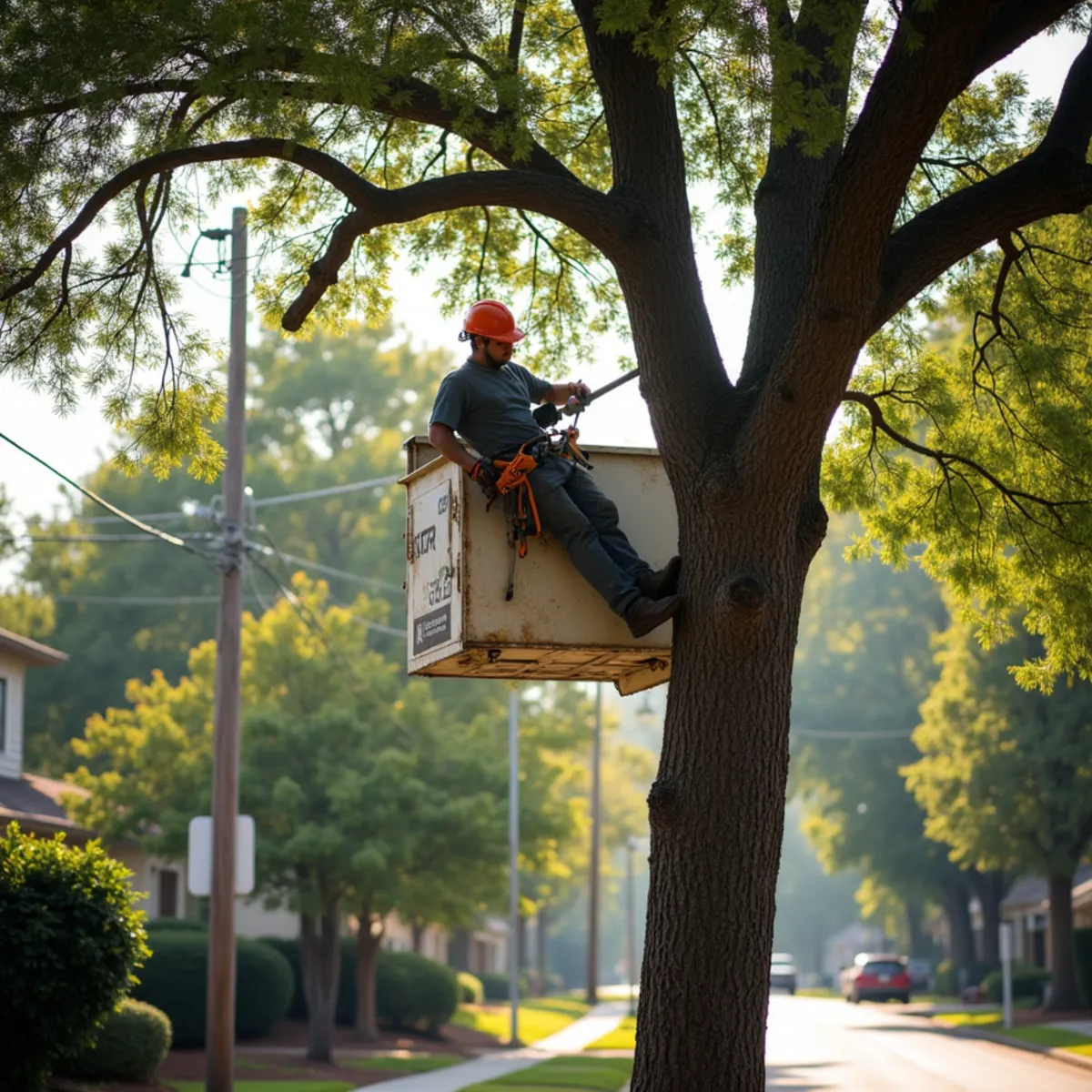
Pruning is the single most cost-effective thing you can do for a mature tree, and it is also the easiest to get wrong. Topping a tree, leaving stubs, or removing too much live wood in one season invites decay, sends up weak water sprouts, and can shorten the tree's life. Our approach starts with a goal for each tree, whether that is clearance, structure, health, or storm risk reduction, and every cut serves that goal. We prune to the branch collar, keep live-crown removal within a safe range for the season, and leave the tree looking like nobody was there except that the problem is gone.
Atlanta's mature water oaks and pines carry a lot of weight in the upper canopy, and dense, un-thinned crowns catch wind like a sail. Selective crown thinning lets air pass through and reduces the leverage a storm can put on a weak union or a codominant stem. Timing matters too: late winter and early spring are favorable for a lot of dormant-season work, though the right window depends on the species and the goal. If a tree shows decay or a structural defect rather than simple overgrowth, we will recommend a professional risk assessment before pruning so we are treating the real problem.
Clearance pruning is one of our most common requests across Atlanta: limbs scraping the roof, blocking a driveway sightline, or crowding a second-story window. We raise and reduce with the tree's natural form in mind rather than shearing it back to stubs. Where limbs are growing into a service drop or utility corridor, that becomes a specialized job handled under utility line clearance rather than routine trimming, because energized conductors change the entire safety plan.
Ongoing pruning is part of a healthy landscape, and many homeowners fold it into a broader residential tree care plan so their oaks and pines get looked at on a schedule instead of only after something breaks. We serve properties throughout the metro and the wider tree service in Fulton County area, and every visit ends with clean, chipped debris and a walkthrough so you know exactly what was cut and why.
Signs your tree needs trimming or pruning
- Deadwood hanging in the crown or a dead branch poised over the roof or driveway.
- Limbs scraping the shingles, blocking gutters, or crowding a second-story window.
- Crossing or rubbing branches wearing wounds into each other.
- A dense, un-thinned crown that catches wind like a sail before storm season.
- Storm-torn or partially broken limbs still attached and failing.
- Low limbs blocking a driveway sightline, walkway, or the yard.
- Suckers and water sprouts crowding the interior after a hard past cut.
Need tree trimming & pruning in Atlanta?
Free estimates · 24/7 emergency line · Licensed & insured
Our tree trimming & pruning process
Objective and tree inspection
We walk the property, identify each tree and its goal, and check for decay, weak unions, and deadwood. Pruning without an objective just removes healthy wood, so we define clearance, thinning, structure, or reduction targets first.
Written pruning plan
You receive a written scope describing which trees are pruned, the type of cuts, how much live crown is removed, and the cleanup plan. We explain the seasonal reasoning when timing affects the outcome.
Climbing or aerial access
Depending on the tree, our crew climbs on rope-and-saddle systems or works from a bucket. We set the exclusion zone and protect beds, turf, and structures before any cutting begins.
Standards-based cuts
Every cut is made to the branch collar to ANSI A300 specifications. We avoid topping and lion-tailing, keep removal within safe limits, and shape the tree to its natural form.
Chip cleanup and review
Brush is chipped, the site is blown clean, and we walk the results with you so you can see the clearance and thinning achieved against the plan.
What affects the price
Trimming price depends far more on tree size, access, and cut complexity than on a flat per-tree rate.
- Overall tree height and crown spread, and how much of it must be reached by climbing.
- The type of prune: light clearance versus a full structural thinning or crown reduction.
- Whether a bucket truck can reach the canopy or the tree must be climbed and rigged.
- Proximity to the house, wires, or fences that require controlled lowering of limbs.
- Volume of deadwood and the amount of chip debris generated.
- Number of trees and whether the work is a one-time visit or a maintenance cycle.
Market context: Local trimming and pruning is commonly cited around $150-$500 depending on size and access. Treat that as market context, not a quote for your specific trees.
Why homeowners choose Your Tree Expert
- Cuts made to ANSI A300 pruning standards by ISA-informed arborists, never topped or stubbed.
- Local crews who know how Atlanta oaks and pines respond to seasonal pruning.
- Licensed, fully insured, and rated 4.9 stars across 168 reviews.
- Honest guidance on whether a prune, a treatment, or a removal is the right call.