
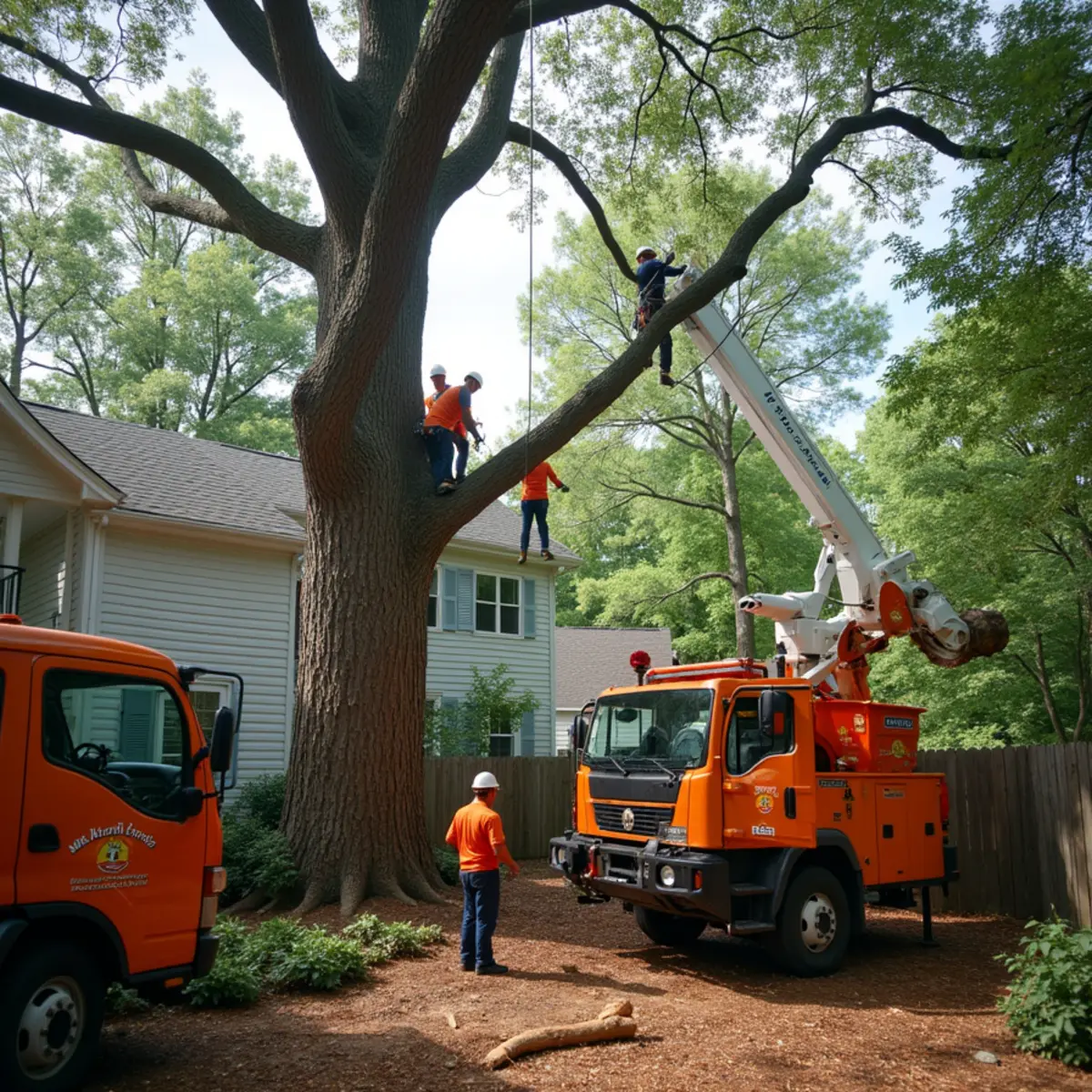
Removing a full-grown tree in a built-up Atlanta neighborhood is a rigging problem before it is a cutting problem. A 70-foot oak beside a driveway cannot simply be dropped; it has to be dismantled in controlled sections and lowered past the roof, the gutters, the fence, and the power drop. We start every job by reading the lean, the decay, the root flare, and the staging space so the removal method fits the property instead of forcing the property to fit the equipment. That planning is what separates a clean removal from an expensive accident.
Atlanta earned its "City in a Forest" reputation honestly, and that dense canopy is exactly why removals here are rarely simple. Homes sit close together, backyards are narrow, and red-clay soil loses shear strength when it stays saturated after days of thunderstorms. A tree that looked stable in July can start heaving its root plate after a wet week. If you are unsure whether a tree needs to go at all, we often recommend a hazardous tree assessment first so you are not paying to remove something a targeted prune could save.
Our removals follow ANSI A300 tree-care practices and ANSI Z133 safety standards, and the crew works to a documented plan for climbing, rigging, and utility clearance. Where a backyard tree is too large or too boxed-in for conventional rigging, we bring in crane-assisted removal to lift sections cleanly over the house. Either way, the goal is the same: get the tree down without touching what you want to keep. We serve homeowners throughout Atlanta and the surrounding tree service in Fulton County coverage area.
Removal is not finished when the trunk is on the ground. We confirm up front whether logs, brush, and chips are hauled off or left for firewood, and whether the stump is included or handled separately as stump grinding. Everything is written into the scope so there is no debate at the final walkthrough. Before regulated hardwoods around 6 inches DBH or pines around 12 inches DBH come down, we help you sort out whether a City of Atlanta Arborist Division permit applies to your specific tree.
Signs a tree may need to be removed
- A visible lean that has increased, especially with soil cracking or heaving on one side of the base.
- Large dead limbs, a dead top, or more than half the crown showing no leaf-out in spring.
- Mushrooms, conks, or soft, crumbling wood at the root flare or trunk, signaling internal decay.
- A hollow, cavity, or deep vertical crack running up the main stem.
- Roots severed or crushed by recent construction, trenching, or driveway work.
- The tree is dead, storm-split, or resting under tension against a structure.
- Repeated limb drop over a driveway, roof, or area where people gather.
Need tree removal in Atlanta?
Free estimates · 24/7 emergency line · Licensed & insured
Our tree removal process
On-site assessment
We inspect the tree's condition, lean, and root stability, then map the fall path, overhead utilities, gate widths, and staging space. This tells us whether the tree can be felled whole or must be dismantled from the top down.
Written scope and permit check
You receive a written scope naming the tree, the removal method, crew and equipment assumptions, debris destination, and stump handling. If the tree is a regulated size under current Atlanta rules, we flag the permit responsibility before scheduling.
Property protection and setup
Before cutting, the crew sets an exclusion zone, protects lawns, driveways, and roofs, and positions rigging lines or the crane. Utility, traffic, and neighbor conditions are reconfirmed on the day of work.
Controlled removal
Sections are rigged and lowered under control rather than allowed to fall. Climbers or a bucket work to the plan, and if hidden decay or conditions differ from the quote, we stop and explain the change before continuing.
Cleanup and walkthrough
Logs, brush, and chips are handled per the scope, the site is raked down, and we walk the property with you to confirm the work matches the agreement before final payment.
What affects the price
No two removals price the same, because size is only one input. Access, structures, and cleanup often move the number more than height does.
- Trunk diameter, total height, and species density (a dense hardwood weighs far more than a pine of the same height).
- Proximity to a roof, fence, driveway, pool, or the neighbor's property.
- Whether the job can be felled whole or must be climbed and rigged in sections.
- Need for crane access, a bucket truck, hand-carrying, or extra property protection.
- Decay, a difficult lean, or storm tension that complicates the cut sequence.
- Debris volume and whether logs, brush, and chips are hauled off or left on site.
- Stump grinding, surface-root treatment, and any restoration added to the scope.
Market context: Published Atlanta removal benchmarks commonly run $200-$2,200, with large-tree removal often cited at $800-$2,500. Those are market-context figures, not a quote for your tree.
Why homeowners choose Your Tree Expert
- Licensed and fully insured, with current liability and workers' compensation certificates available on request.
- Work performed to ANSI A300 and ANSI Z133 standards by ISA-informed arborists.
- Local Atlanta crews operating in the metro since 2020, rated 4.9 stars across 168 reviews.
- Help identifying City of Atlanta regulated-tree permit questions before work begins.