Emergency Guides
How to Spot Root Rot and Fungal Growth on Mature Water Oaks in North Georgia
Water oaks dominate the North Georgia canopy but rot from the roots up, often with few warnings. Learn the fungal and structural signs that mean it is time for an assessment.
Why Water Oaks Are Especially Prone to Root Rot
The water oak is one of the most common large trees in metro Atlanta yards, and it is also one of the most quietly dangerous. It grows fast, reaches 60 to 80 feet, and then declines faster than a white oak, typically living only 60 to 80 years. Much of that decline starts underground.
North Georgia red clay holds water against the root collar, and water oaks planted too deep or mulched into a volcano at the base sit in exactly the damp conditions decay fungi prefer. By the time the canopy thins, the root system may already be compromised, which is why root rot is the failure mode that surprises homeowners most.
Fungal Signs You Can See From the Ground
The most reliable early clue is fungal fruiting at or near the base of the trunk. Shelf-like conks, clustered mushrooms after rain, or a crusty growth on the root flare all suggest the wood inside is being broken down. Fungi that fruit on the lower trunk and roots are especially concerning because they attack the very tissue that anchors the tree.
- Mushrooms or shelf conks emerging from the soil line, root flare, or lower trunk.
- A soft, hollow, or punky sound when the base is sounded with a mallet.
- Peeling or loose bark over the root collar with dark, damp wood beneath.
- Fine sawdust-like frass or excavated soil suggesting decay and insect activity together.
Structural Warning Signs in the Canopy and Roots
Not every sign is a mushroom. Root rot often shows up first as a thinning, off-color canopy, early leaf drop, or dieback that starts at the top and outer branches. A water oak that leafs out late or drops leaves in midsummer is telling you something about the roots you cannot see.
Watch the ground, too. A soil heave or crack on one side of the trunk, or roots that lift as the tree sways in wind, points to a failing root plate. In saturated red clay, that plate can let go in a storm even when the trunk looks perfectly sound.
The Assessment: Confirming Decay Before You Decide
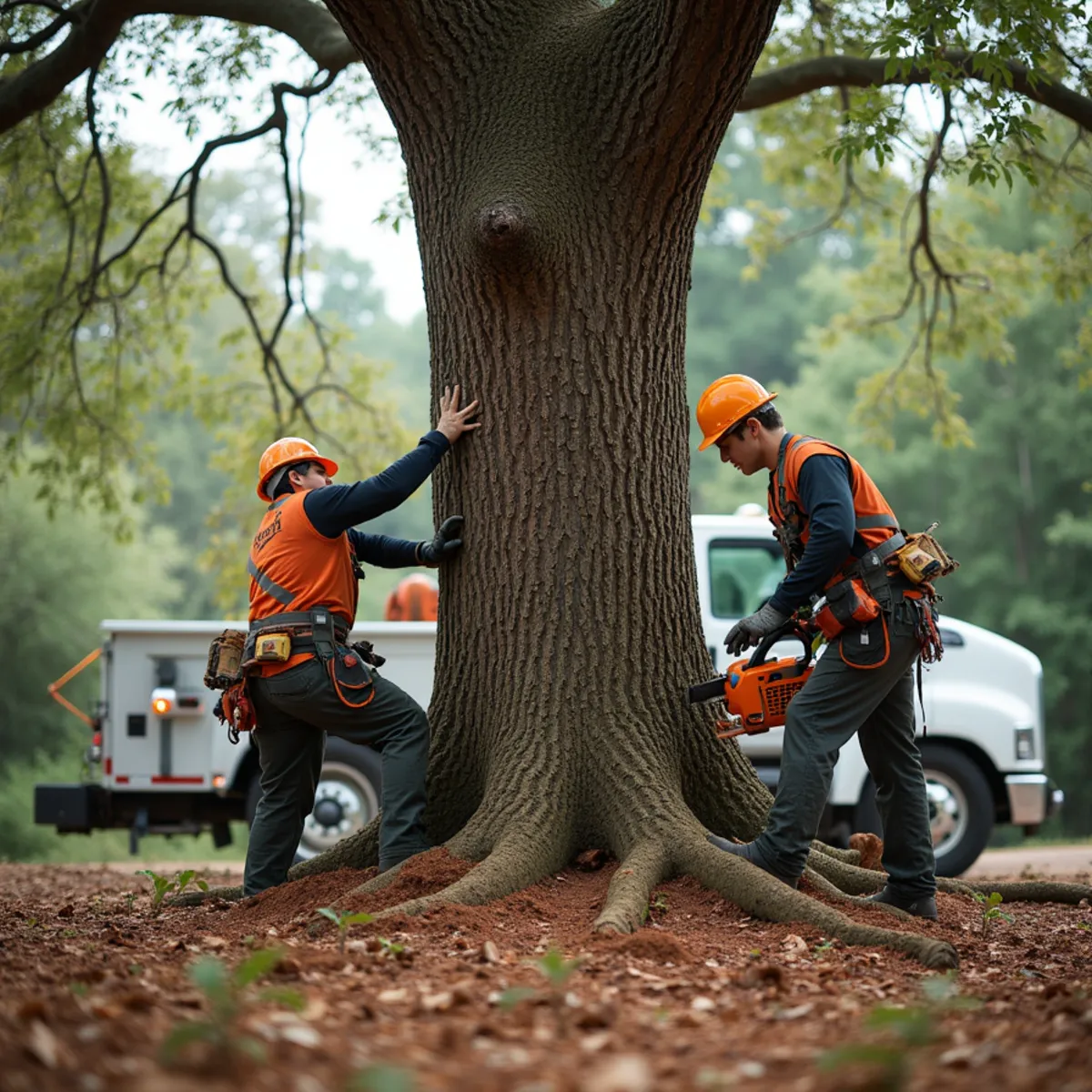
You cannot diagnose a water oak from a photo, and you should not have to guess. A professional hazardous tree assessment evaluates the root flare, sounds the trunk for hollows, checks the lean and root plate, and weighs the target, meaning what the tree would hit if it failed. The goal is to separate a tree that can be pruned and monitored from one that has lost too much structural root to keep.
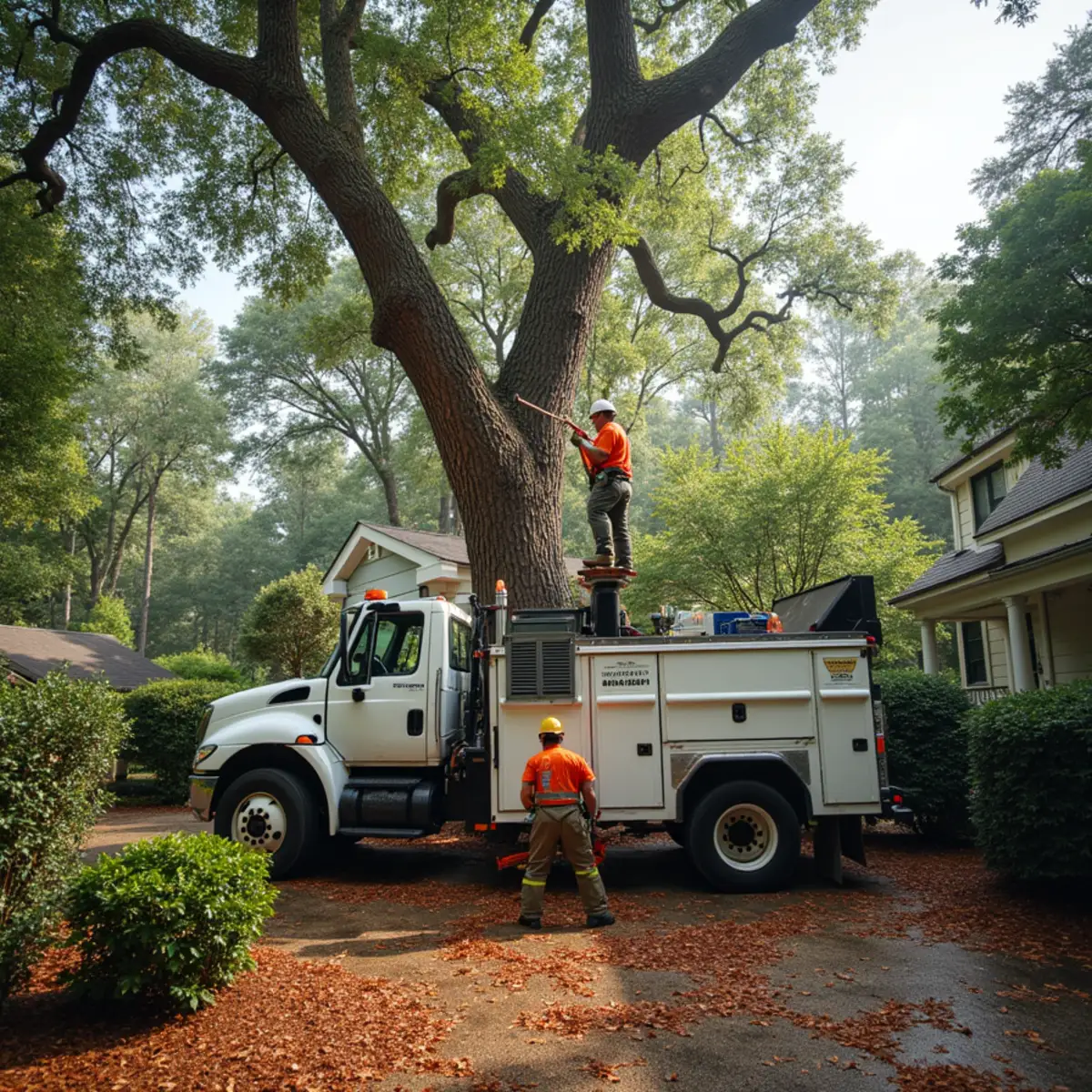
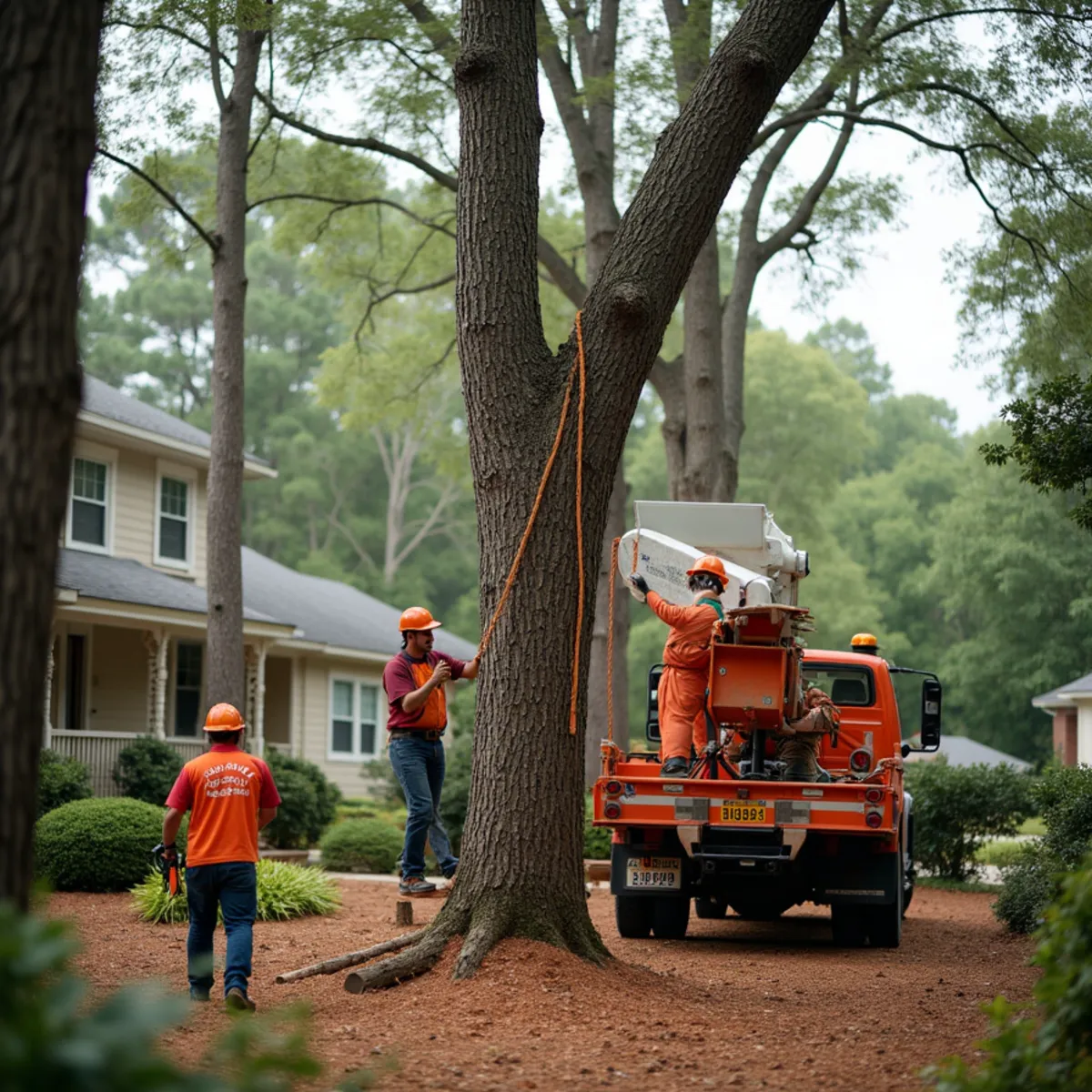
Where decay is advanced and the tree overhangs a house or driveway, removal is often the responsible call. We handle regulated tree removal with the rigging and, where needed, crane access to bring a compromised oak down under full control.
Local Conditions in Sandy Springs and North Metro
Neighborhoods across Sandy Springs and the north metro are full of these mature water oaks, many planted when the subdivisions went in and now reaching the end of their reliable lifespan. Sloped lots along the Chattahoochee corridor add another factor, because saturated clay on a grade gives a failing root plate even less to hold.
If you have a large water oak within striking distance of the house, an assessment before storm season is the difference between a scheduled removal and a 2 a.m. emergency call.
Not Every Mushroom Means Removal
The most useful thing an arborist does at the base of a suspect water oak is separate the fungi that threaten the tree from the ones simply eating mulch or a dead surface root. A cluster of small mushrooms in wood chips against the trunk is often harmless. A firm shelf conk or a leathery bracket emerging directly from the root flare or the buttress roots is a different story, because those species digest the structural wood that anchors the tree.
Location is the tell, so we read where the fruiting body attaches, not just that one is present. We also do something a homeowner usually cannot: excavate the root collar. Many metro water oaks were planted too deep or buried under years of mulch and grade change, hiding the trunk flare and the girdling roots and decay that hide with it. Gently exposing the flare, sometimes with an air spade, shows whether sound buttress wood remains or the anchor is already compromised, which is the core question a hazardous tree assessment answers.
Use the table to read what you are seeing before you assume the worst, or dismiss it.
| Where you see it | Typical significance | What we do next |
|---|---|---|
| Mushrooms in surface mulch | Often harmless decomposers | Note and monitor |
| Conk on the root flare or buttress | Decay in structural anchoring wood | Assess wall thickness and target |
| Fruiting on a buried, over-mulched flare | Flare may be decaying unseen | Excavate the collar to inspect |
| Bracket high on the trunk | Stem decay above ground | Sound the trunk, evaluate load |
Do Not Wait for the Storm
Root rot rarely reverses, and a hollow anchor does not heal. If you see conks, a heaving root plate, or a thinning canopy on a water oak, call (855) 615-0568 for a professional tree risk assessment. We will tell you honestly whether monitoring, pruning, or removal is the right move, and we will document the findings for your records.
Written & reviewed by
The Your Tree Expert crew
This guide was written and reviewed by our working arborists — ISA-informed, fully licensed and insured, serving Fulton County and Metro Atlanta since 2020. We handle the removals, storm cleanups, and assessments described here every day.
Need a hand from a certified arborist?
Your Tree Expert provides fast, insured tree care across Atlanta and Metro Atlanta. Get a free written estimate or call our 24/7 line.