Emergency Guides
What to Do When a Massive Oak Tree Falls on Your House in Atlanta GA
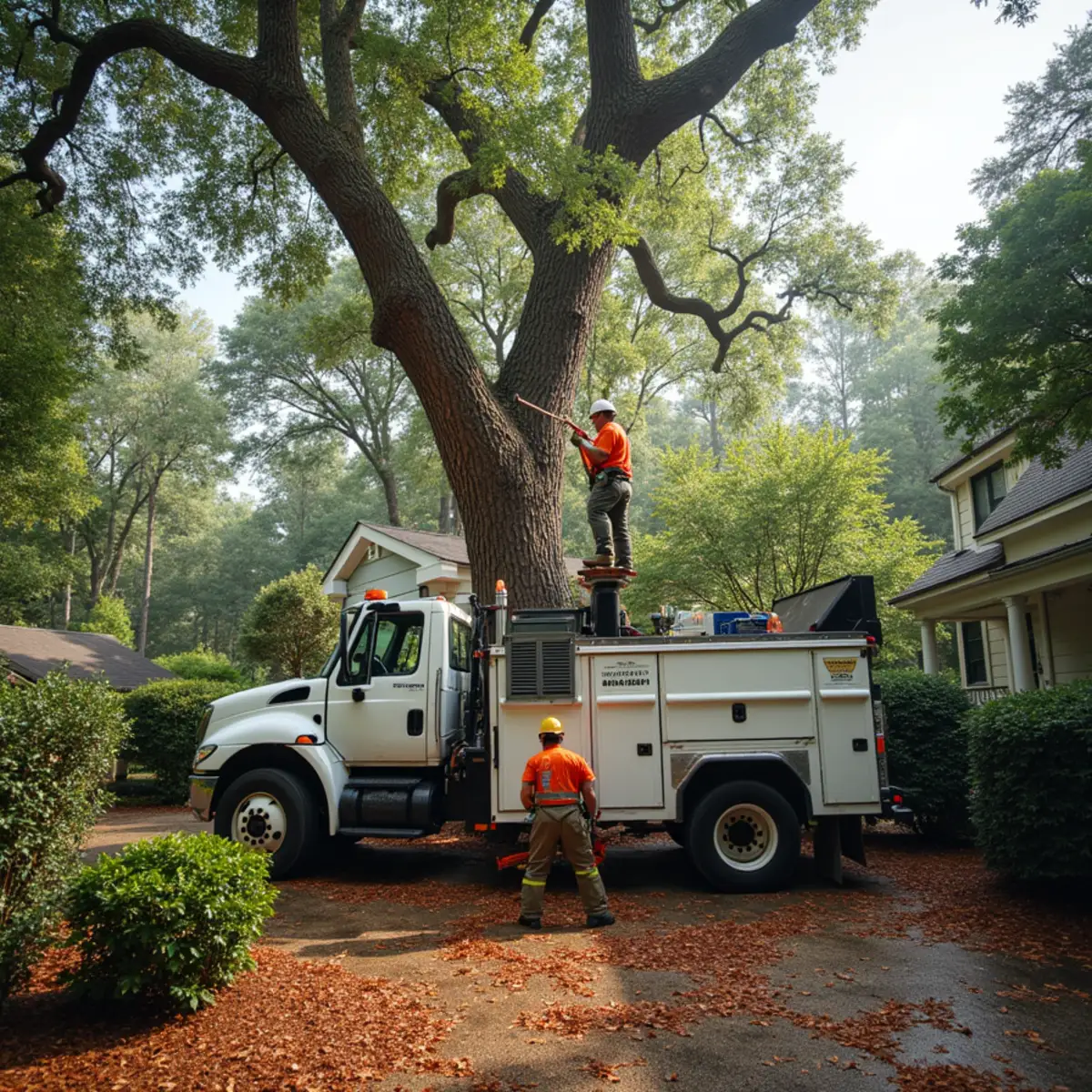
A mature water oak through the roof is one of the most dangerous outcomes an Atlanta storm can produce. Here is the safe, documented sequence to follow before anyone touches the tree.
Why Atlanta Oaks End Up on Roofs
Atlanta is a city in a forest, and much of that canopy is made up of mature water oaks that were planted or seeded decades ago. Water oaks are fast-growing but comparatively weak-wooded and short-lived, and by the time they tower over a two-story house they are often carrying internal decay you cannot see from the ground.
Add the local trigger: a summer thunderstorm or a tornado remnant dumps two inches of rain into red-clay soil, the clay loses shear strength as it saturates, and a root plate that held for forty years lifts in a single gust. When that happens over a bedroom or a driveway, the priority is no longer the tree. It is the people underneath and around it.
The First Hour: People, Power, Then Paperwork
Get everyone out of the affected rooms and out from under any part of the canopy that is still standing. A tree that has already failed is often under tension, and a limb that looks settled can release without warning. Establish an exclusion zone wider than the branch spread and keep pets and children well clear.
Treat any wire the tree is touching as live, even if the neighborhood has lost power. Call Georgia Power or your utility before you call anyone else when a line is involved. Only after people and utilities are handled should you begin documenting the scene for your insurer.
- Leave the house through a door away from the fall zone if the structure is compromised.
- Do not climb onto the roof, cut branches, or try to pull the tree off with a vehicle.
- Assume a tree contacting a power line is energized until the utility clears it.
- Shut off gas at the meter only if you smell gas and can do so from outside safely.
Document the Damage Without Entering the Danger Zone
Insurance adjusters want to see the whole story, so photograph from a safe distance before anyone starts cleanup. Capture the entire tree, the failure point at the base or trunk, the roof or wall it struck, your street number, and any hanging limbs. Wide shots first, then details, and never step under a suspended section for a better angle.
Save the date and time of the storm, and keep every receipt from this point forward. Our crews document their own work as well, which gives you a matched set of before and after photos for the claim. You can read more in our guide to whether Georgia homeowners insurance pays for tree removal.
Temporary Protection That Does Not Create a Second Hazard
If rain is still coming and part of the roof is open, a tarp can limit water damage, but only install one when you can reach the spot without climbing near the tree or a wire. If the safe path to the opening runs under the trunk, wait for the crew. Water damage is repairable; a person under a shifting oak is not.
When you call our 24/7 emergency tree service line, tell the dispatcher the address, whether a utility line is involved, how the tree is loaded against the structure, and how a truck and equipment can reach the yard. That triage call lets us plan the lift before we ever arrive.
How a Tree Over a House Is Actually Removed
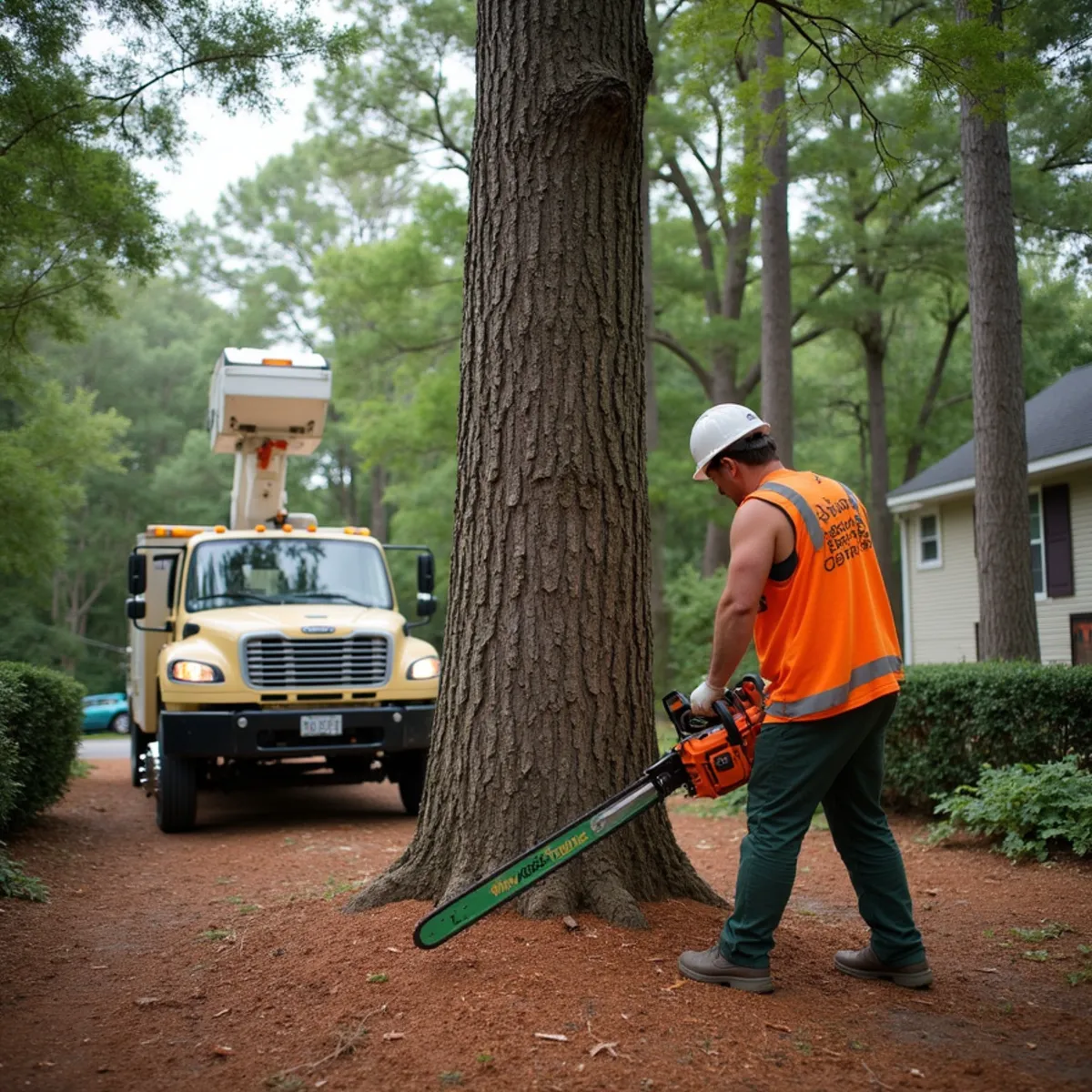
A tree lying on a roof cannot simply be cut and dropped. Each section has to be rigged and lowered under control, or lifted clear with a crane, so the weight comes off the structure gradually instead of crashing through it. Our arborists assess trunk tension, the direction of load, and the safest sequence before the first cut, following ANSI Z133 safety practices for rigging and chainsaw work.
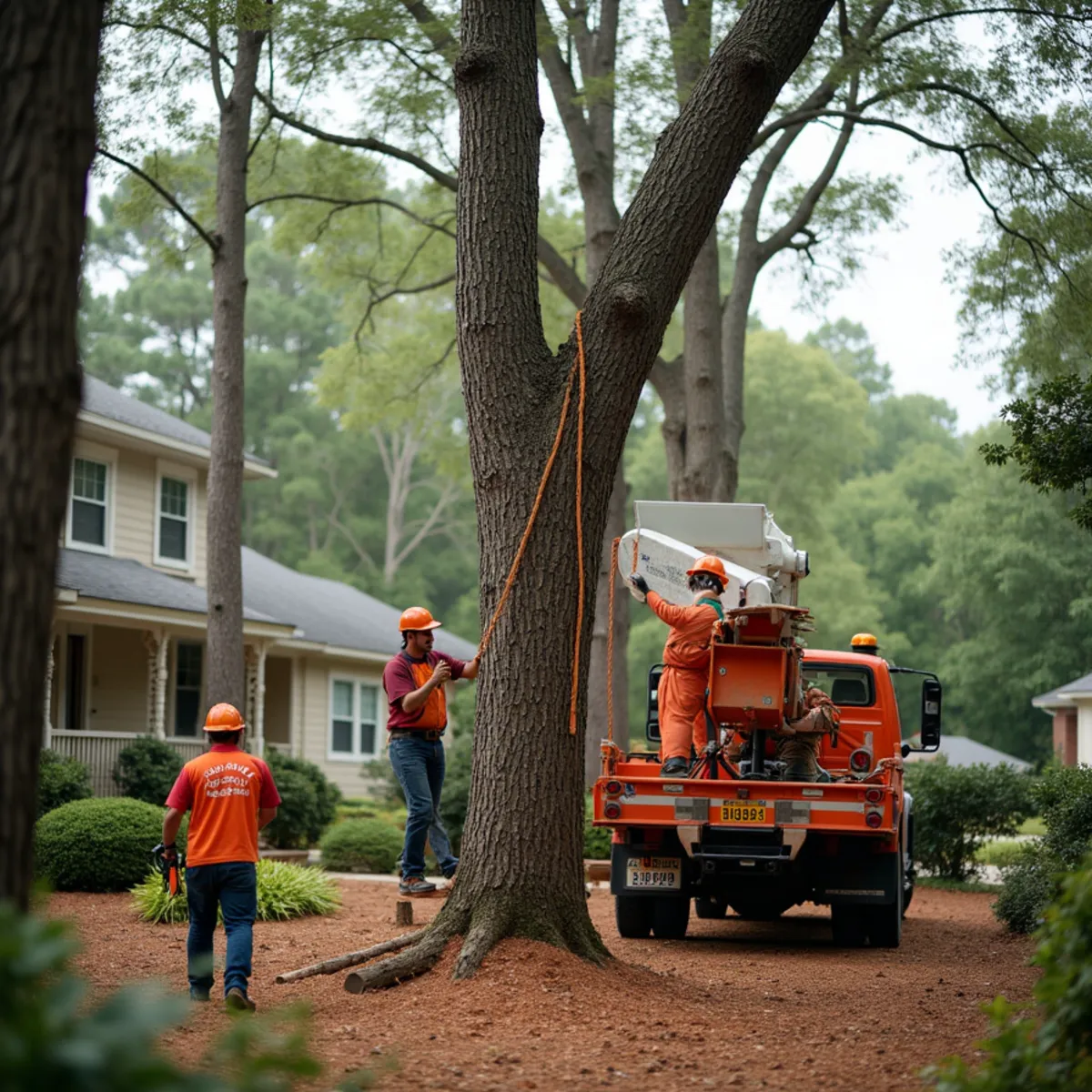
On tight lots common in intown neighborhoods, crane-assisted removal is often the safest route because it keeps crews off a damaged roof and lets us set each piece into the yard. Where a crane cannot reach, we build a rigging system to lower limbs piece by piece. Either way, this is a fallen tree on house situation that calls for a controlled plan, not a fast one.
Serving Atlanta Homeowners Around the Clock
We dispatch across Atlanta and the surrounding metro from a central hub, and storm nights are exactly when we expect the phone to ring. A 60-minute callback or triage response is available when operations support it, though physical arrival depends on road conditions, the volume of calls after a widespread storm, and whether your street is passable.
What we can promise on that first call is a clear next step, an honest read on the hazard, and a written scope once we can see the tree. We will not ask you to enter an unstable area, and we will not promise what your insurer will cover.
What Our Crew Reads Before the First Cut
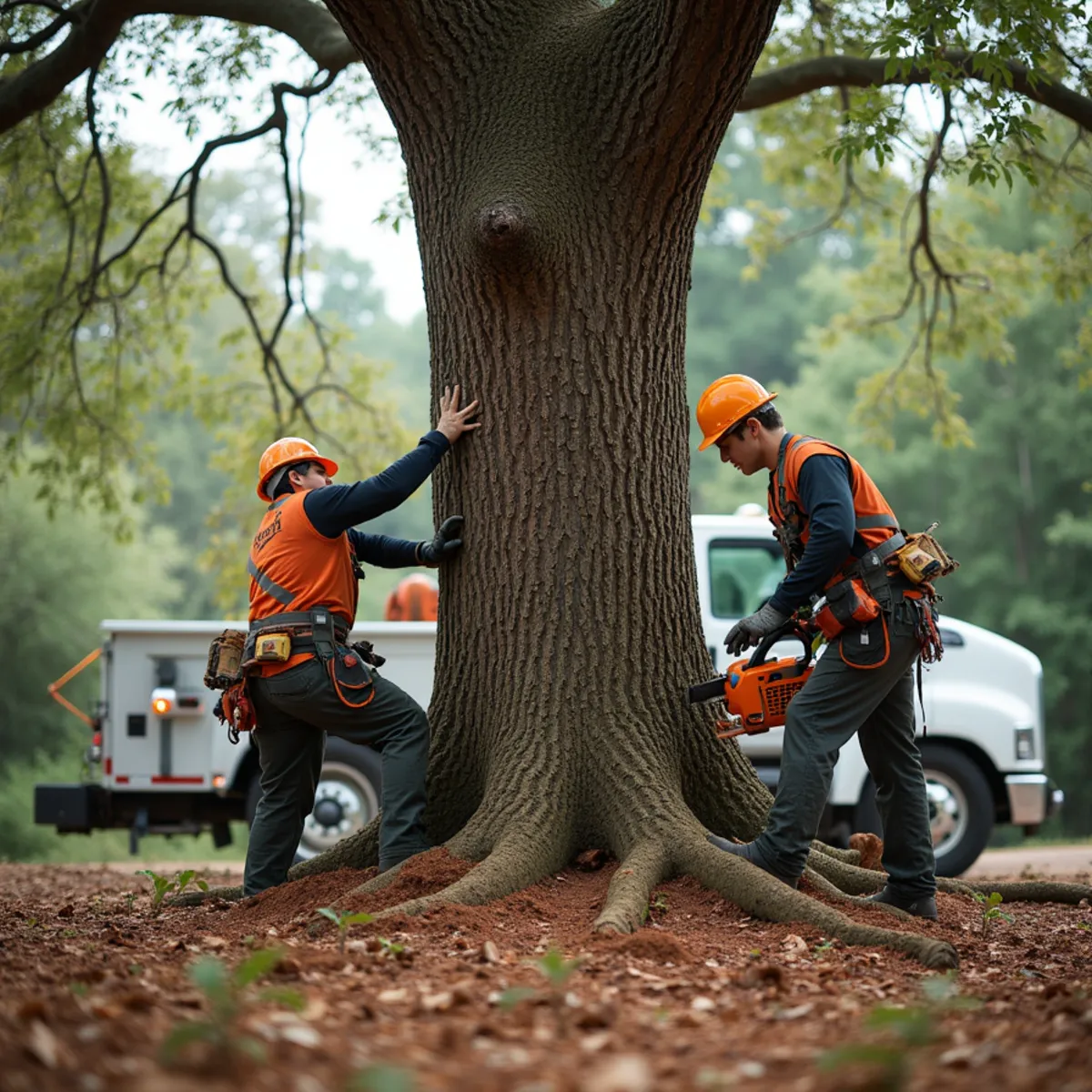
A tree lying across a roof is rarely just resting there. More often it has become part of the structure, with the trunk or a major limb bearing weight the rafters below are no longer carrying on their own. Cut that piece free carelessly and the roof can drop or spring back, doing more damage in a second than the tree did on the way down. Before anyone starts a saw, our lead arborist reads the load the way an engineer reads a beam.
The two questions that drive the plan are where the wood is in compression and where it is in tension, and which parts of the house the tree is currently holding up. On a saturated Atlanta lot the root plate may still be partly attached and under spring tension, so the base is as much a hazard as the canopy. Where the picture is complicated, a formal on-site hazard assessment documents the loading before we commit to a sequence.
This is why the same collapsed oak can be a two-hour job or a full-day crane operation. The table below shows the signs we look for and how each one changes the plan.
| What we look at | What it tells us | How it changes the plan |
|---|---|---|
| Trunk resting on the ridge or a bearing wall | The tree may be supporting the roof | Lift or crib before cutting so nothing drops |
| Uprooted, spring-loaded root plate | The base is under tension and can kick | Secure or rig the butt before severing |
| Limbs pinned against a wall or window | Stored energy waiting to release | Rig each piece; no free-drop cuts |
| Wire tangled in the canopy | Assume it is energized until cleared | Stop and wait for Georgia Power |
Call for Immediate Triage
If an oak is on your Atlanta house right now, get everyone clear, report any wire contact to the utility, and call our team at (855) 615-0568. We will triage the hazard, explain the safe next step, and arrange a controlled tree-on-house removal the moment your site can be approached. One call starts the plan.
Written & reviewed by
The Your Tree Expert crew
This guide was written and reviewed by our working arborists — ISA-informed, fully licensed and insured, serving Fulton County and Metro Atlanta since 2020. We handle the removals, storm cleanups, and assessments described here every day.
Need a hand from a certified arborist?
Your Tree Expert provides fast, insured tree care across Atlanta and Metro Atlanta. Get a free written estimate or call our 24/7 line.