Problem-Solving Core
Tree Cabling and Bracing: How Steel Cables Can Save a Prized Multi-Stem Hardwood
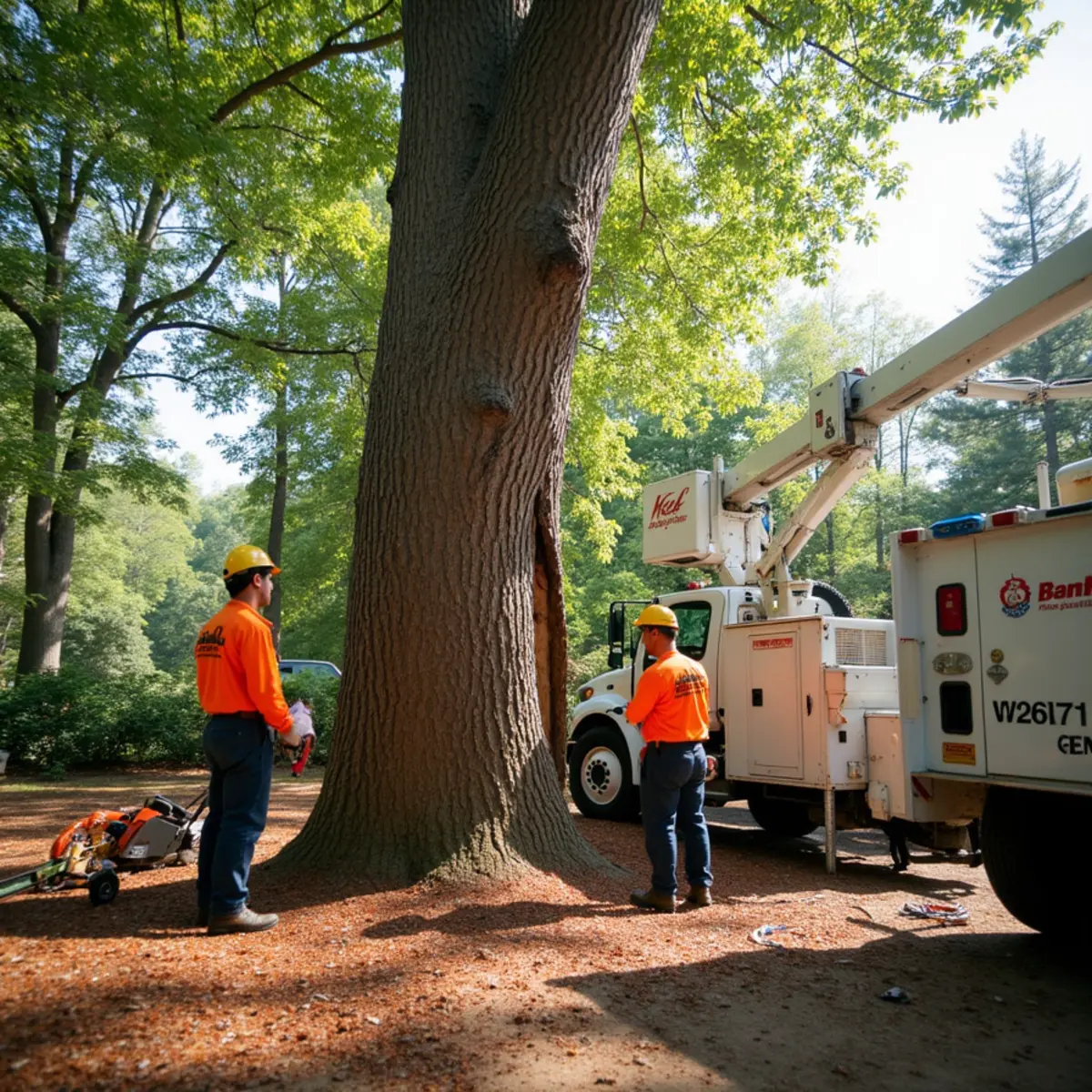
A cherished multi-stem hardwood with a weak union does not always have to come down. Cabling and bracing can add years of safe life. Here is how the hardware works.
When a Tree Is Worth Saving
Some trees are simply too valuable to lose without a fight: the grand oak that shades the whole backyard, a heritage maple older than the house, a multi-stem hardwood that defines the property. When such a tree develops a structural weakness, removal is not the only option. Cabling and bracing can reinforce the tree and buy many more years of safe life.
The classic candidate is a multi-stem tree with a weak, V-shaped union where two or more codominant stems meet. Those unions often trap bark inside the joint, which prevents the wood from knitting together and creates a natural splitting point under wind or ice load.
How Cabling and Bracing Differ
Cabling and bracing are two tools for the same goal: limiting the movement that could split a tree apart. They are often used together.
Cabling installs flexible steel cable high in the canopy between limbs or stems, reducing how far they can move independently in wind while still allowing natural sway. Bracing installs rigid threaded rods directly through a weak union or a split to hold the sections together mechanically. Cabling reduces stress on a union; bracing physically reinforces one that is already cracking.
What the Installation Involves
This is skilled, standard-driven work, not something to improvise with hardware-store cable. Proper support systems follow ANSI A300 Part 3, which governs placement, hardware, and load.
- An assessment identifies the defect, the load, and whether support is appropriate.
- Cables are positioned high in the canopy, typically about two-thirds up the stems, for the right leverage.
- Hardware is sized to the tree and installed to distribute rather than concentrate stress.
- Bracing rods are placed through or just above a weak union to hold sections together.
- The system is inspected periodically, because trees grow and hardware must be checked.
Cabling Is Not a Cure-All
Support systems reduce risk; they do not eliminate it, and they cannot rescue every tree. A tree with extensive internal decay, a failing root plate, or a union that has already split badly may be past saving, and installing cables in a fundamentally unsound tree can give false confidence.
That is why the decision starts with a professional hazardous tree assessment. An honest evaluation determines whether cabling genuinely reduces the risk to an acceptable level or whether the responsible answer is removal. We will tell you which, even when it is not the answer you hoped for.
Ongoing Inspection Matters
A cabled tree is not a finished project. As the tree grows, the hardware and the union it supports need periodic inspection to confirm the cables are sound, properly tensioned, and not girdling the limbs. Storm seasons in Atlanta put real load on these systems, so a check-in after major weather is wise.
Folding cable inspection into a regular residential tree care visit keeps the system doing its job for the long haul and catches any issue before it becomes a failure.
Preserving Dunwoody's Mature Canopy
Neighborhoods like Dunwoody are full of the mature hardwoods that make North Atlanta so green, and many have the codominant unions that cabling was designed to support. Saving one of these trees preserves shade, property value, and character that a replacement sapling cannot match for decades.
When a prized tree can be kept safely, we would much rather cable it than cut it. When it cannot, we will be straight with you about why.
Static Steel vs. Dynamic Synthetic Systems
Not all support systems work the same way, and the choice between them shapes how the tree behaves for years. The traditional approach is a static system: extra-high-strength steel cable installed high in the canopy under ANSI A300 Part 3, sized and tensioned to hold two stems at a fixed distance so a weak union cannot move far enough to split. It is proven, strong, and the right call where a union is already cracking and needs firm restraint.
The newer approach is a dynamic system, a hollow synthetic rope with built-in shock absorption that lets the stems move naturally while catching the extreme loads. Because it allows the tree to flex, a dynamic system can encourage the reaction wood that helps a tree strengthen itself, which suits a preventive install on a valuable but not-yet-failing multi-stem hardwood. When the defect is genuinely past saving, honest removal remains the alternative.
The table lays out the options an arborist weighs for a prized Atlanta hardwood.
| System | How it works | Best suited for |
|---|---|---|
| Static steel cable | Holds stems at a fixed distance | A union already splitting |
| Dynamic synthetic rope | Allows sway, catches peak loads | Preventive support, healthy stems |
| Threaded bracing rods | Rigid reinforcement through a union | A cracked or split junction |
| Combined cable and brace | Restraint plus reinforcement | Severe or high-value defects |
Ask Whether Your Tree Can Be Saved
Before you write off a beloved multi-stem hardwood, call (855) 615-0568 for a structural assessment. We will evaluate the union, the decay, and the roots, then tell you honestly whether cabling and bracing can save it or whether removal is the safer path.
Written & reviewed by
The Your Tree Expert crew
This guide was written and reviewed by our working arborists — ISA-informed, fully licensed and insured, serving Fulton County and Metro Atlanta since 2020. We handle the removals, storm cleanups, and assessments described here every day.
Need a hand from a certified arborist?
Your Tree Expert provides fast, insured tree care across Atlanta and Metro Atlanta. Get a free written estimate or call our 24/7 line.