Prevention & Maintenance
How Close Can You Plant a Tree to Your Foundation in Georgia Without Causing Damage?
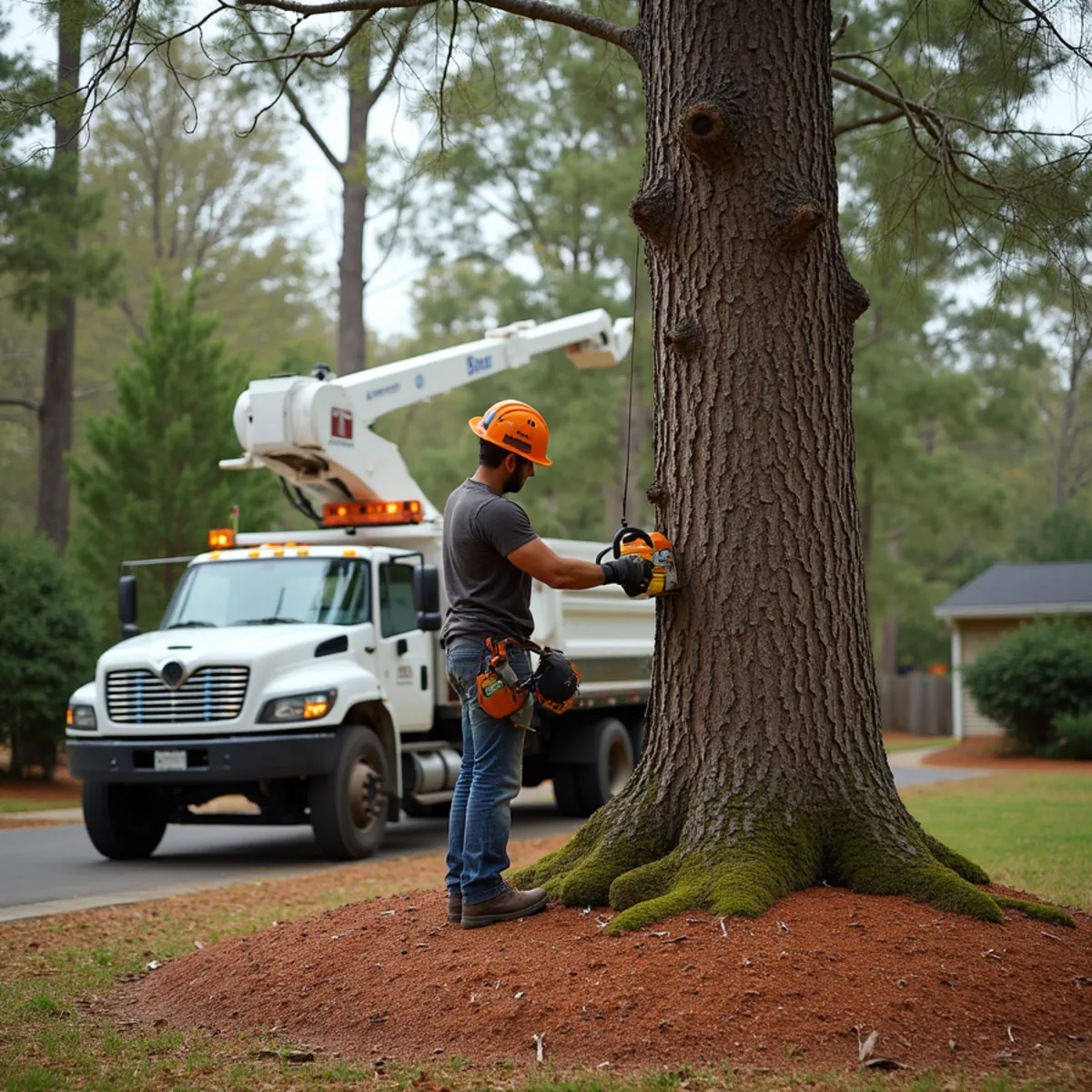
A tree too close to the house can crowd the foundation, roof, and gutters. Learn safe planting distances for Georgia's red clay and what to do about a tree already too near.
The Distance Question Homeowners Get Wrong
People plant a tree for the shade it will throw in twenty years but judge its spacing by the little sapling in front of them. That is how a maple ends up three feet from the wall and a willow oak ends up shading the whole roof. The right question is not how big the tree is now, but how big it will be at maturity.
In Georgia, red-clay soil adds a wrinkle. Clay shrinks when it dries and swells when it wets, and a thirsty tree pulling moisture from the soil beside a foundation can worsen that movement. So distance matters here for more than just branches over the roof.
Safe Distances by Mature Size
A useful rule of thumb is to plant a tree at least as far from the house as its expected mature height, and at minimum beyond its mature canopy spread. Large shade trees need real room; small ornamentals can sit closer. Use the table as a starting point and adjust for the specific species.
| Tree size at maturity | Example species | Suggested minimum distance from foundation |
|---|---|---|
| Large (60 ft+) | Water oak, willow oak, loblolly pine | At least 20-30 ft |
| Medium (30-60 ft) | Red maple, river birch | At least 15-20 ft |
| Small (under 30 ft) | Dogwood, crape myrtle, redbud | At least 8-12 ft |
What a Too-Close Tree Actually Damages
The dramatic image is roots cracking a foundation, but that is actually the less common problem. Tree roots rarely break sound, modern foundations directly; more often the trouble is indirect and cumulative.
- Roots exploiting and widening cracks in older or already-compromised foundations.
- Soil-moisture swings in clay causing settlement and hairline cracking near the tree.
- Roots invading and clogging drain lines, sewer laterals, and downspout drains.
- Limbs over the roof dropping debris, clogging gutters, and abrading shingles.
- Limbs providing a bridge for pests and holding moisture against the siding and roof.
The Red-Clay Factor
Georgia's expansive clay deserves its own mention. During a drought, a large tree can pull enormous volumes of water from the soil under and beside a slab, causing the clay to shrink and the foundation to settle unevenly. When rain returns, the clay swells again. Repeated over years, that cycle is a genuine cause of foundation movement near big trees.
This does not mean you cannot have trees near your home, only that species choice and distance matter more in clay than in sandy soil, and that a large, thirsty tree already close to the slab is worth watching.
Already Have a Tree Too Close?
If a mature tree is already crowding your foundation, do not panic-cut it. Many close trees coexist with a house for decades without harm, particularly if the foundation is sound and the tree is healthy. The first step is an honest assessment of the specific risk: the tree's size and species, its health, the foundation's condition, and any signs of drain or settlement trouble.
Depending on that assessment, the answer might be managing the canopy with hanging limb removal and pruning to keep it off the roof, monitoring, or, where the tree genuinely threatens the structure or is in decline, removal. It is a case-by-case call, not a blanket rule.
Serving Brookhaven's Established Neighborhoods
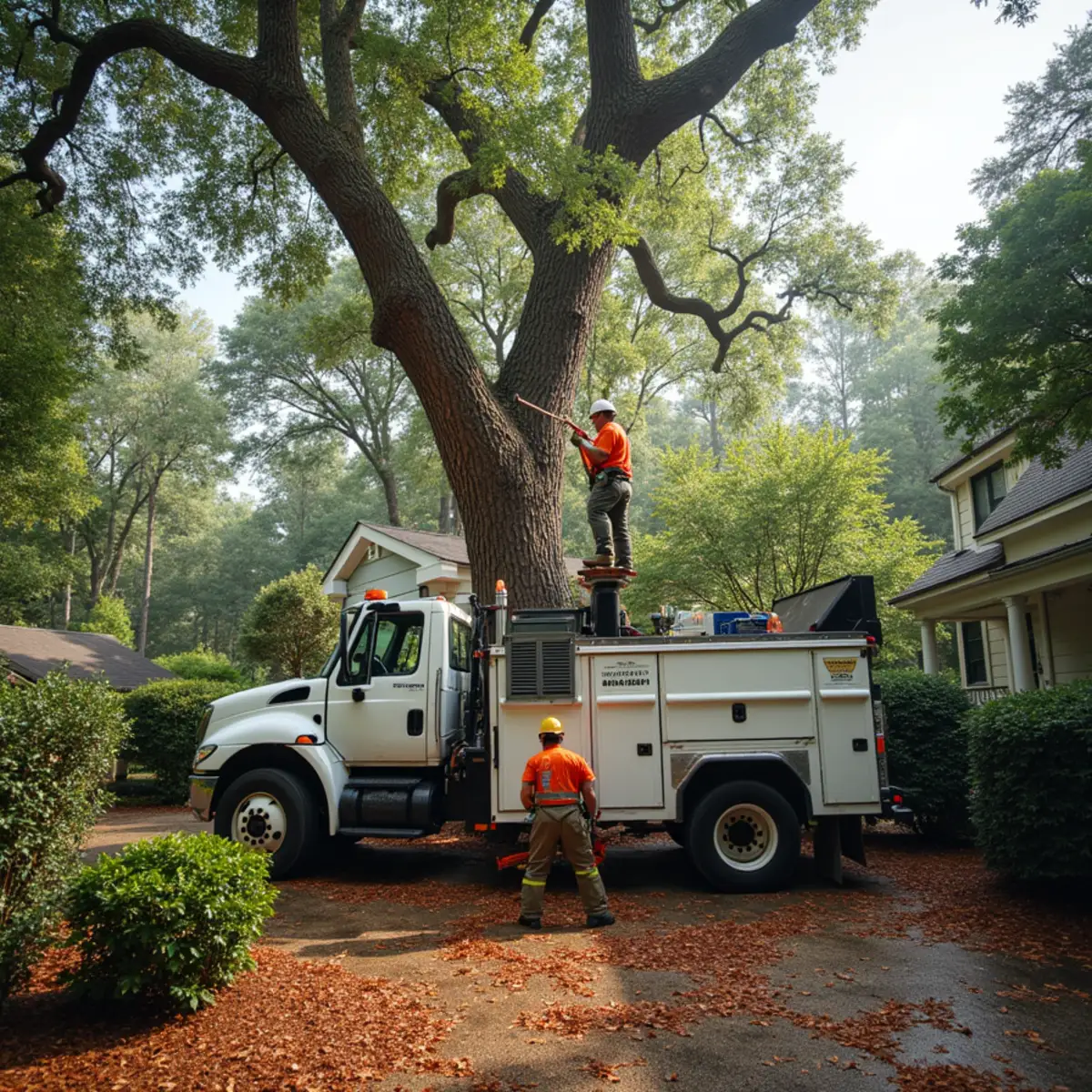
Established neighborhoods like Brookhaven are full of mature trees planted close to homes decades ago, long before anyone thought about their eventual size. We help homeowners there decide, tree by tree, whether to prune and keep, monitor, or remove, based on the actual risk rather than fear.
The right plan protects both your home and the mature canopy that gives the neighborhood its character.
Root Barriers, Species Choice, and What Actually Works
Homeowners who learn a tree is too close often ask about root barriers, imagining a panel that simply stops the roots. They can help in the right situation, but they are not magic. To do anything, a barrier has to be installed deep and continuous along the side you are protecting, ideally when the tree is young; a shallow or gapped barrier just reroutes roots underneath it. And a barrier does nothing about the bigger clay-soil issue, which is a large tree pulling moisture from under the slab during drought.
The more reliable fixes are chosen before you ever plant, because species and distance do far more than any barrier.
In Georgia's expansive clay, keep the thirstiest, largest species well back from the house and lean toward smaller ornamentals near the foundation. Trees notorious for weak wood or aggressive surface roots, like silver maple and the old Bradford pears, are poor choices close in regardless of barriers. Directing downspouts and grading water away from the foundation reduces the moisture swings that actually move clay. Where a mature tree is already too close, thoughtful residential tree care and canopy management usually beat drastic measures, and removal is reserved for trees genuinely threatening the structure.
Get a Straight Answer on Your Tree
Wondering whether the tree by your foundation is a problem? Call (855) 615-0568 for an assessment. We will evaluate the species, size, and risk, then recommend pruning and limb management, monitoring, or removal, so you make the decision with facts, not guesswork.
Written & reviewed by
The Your Tree Expert crew
This guide was written and reviewed by our working arborists — ISA-informed, fully licensed and insured, serving Fulton County and Metro Atlanta since 2020. We handle the removals, storm cleanups, and assessments described here every day.
Need a hand from a certified arborist?
Your Tree Expert provides fast, insured tree care across Atlanta and Metro Atlanta. Get a free written estimate or call our 24/7 line.