Problem-Solving Core
Why Crane Tree Removal is the Safest Option for Inaccessible Atlanta Backyards
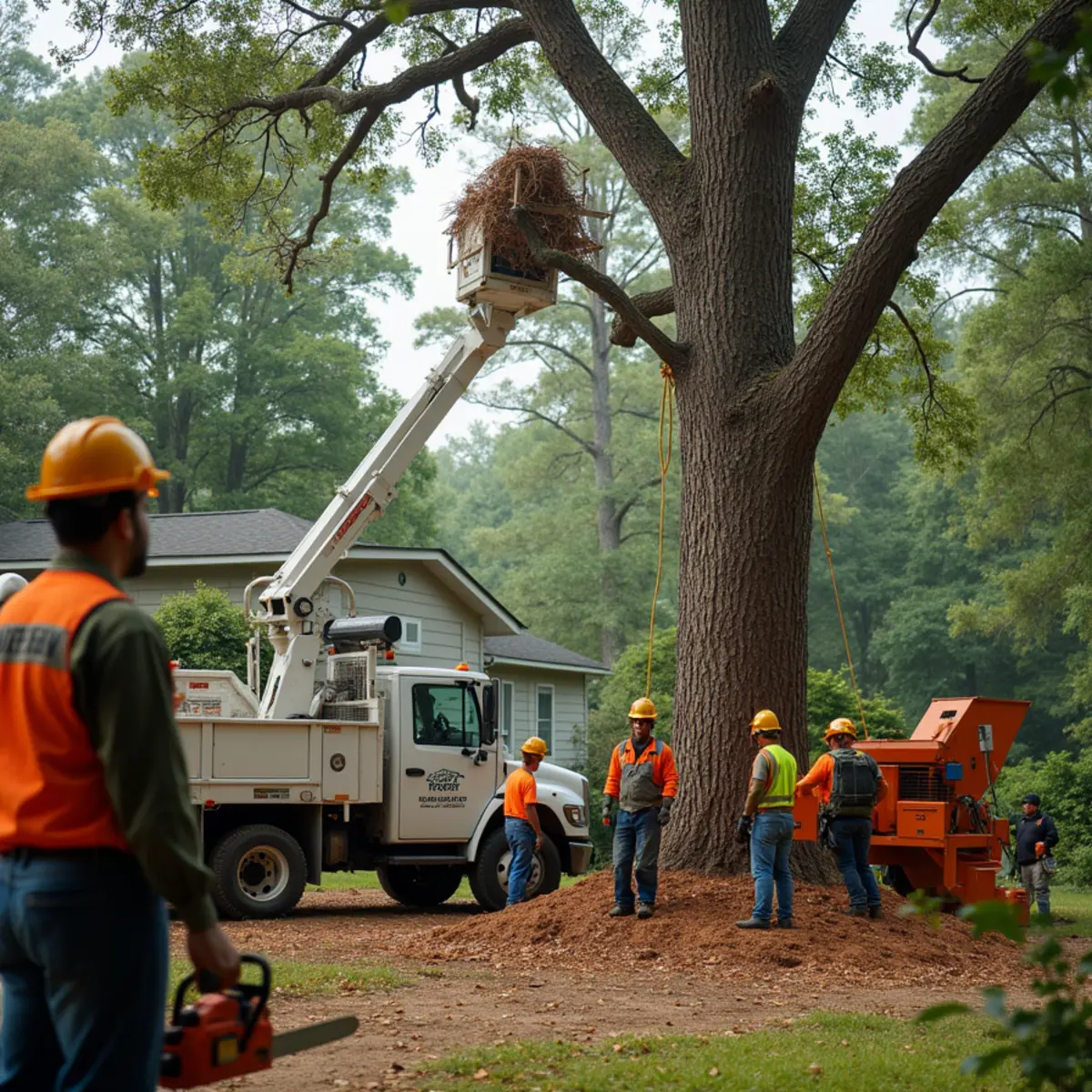
When a big tree sits behind a house with no equipment access, a crane is frequently the safest way out. Here is how crane removal protects your property and crew.
The Problem With Inaccessible Backyards
Plenty of Atlanta lots share the same challenge: a large, mature tree in the back corner, a house between it and the street, and only a narrow gate or side yard for access. No bucket truck can reach it, and the fall zone is boxed in by the home, fences, and a neighbor's property just over the line.
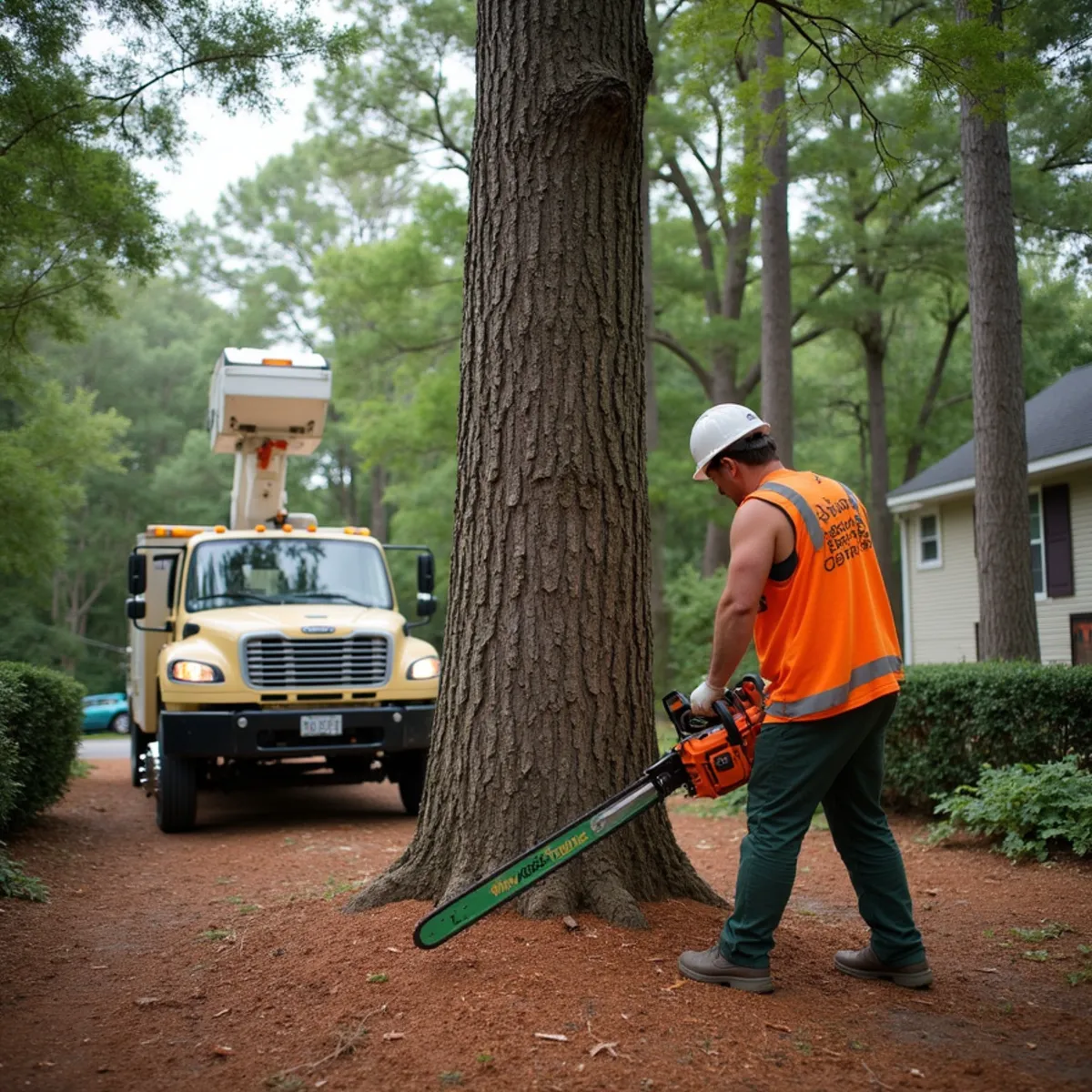
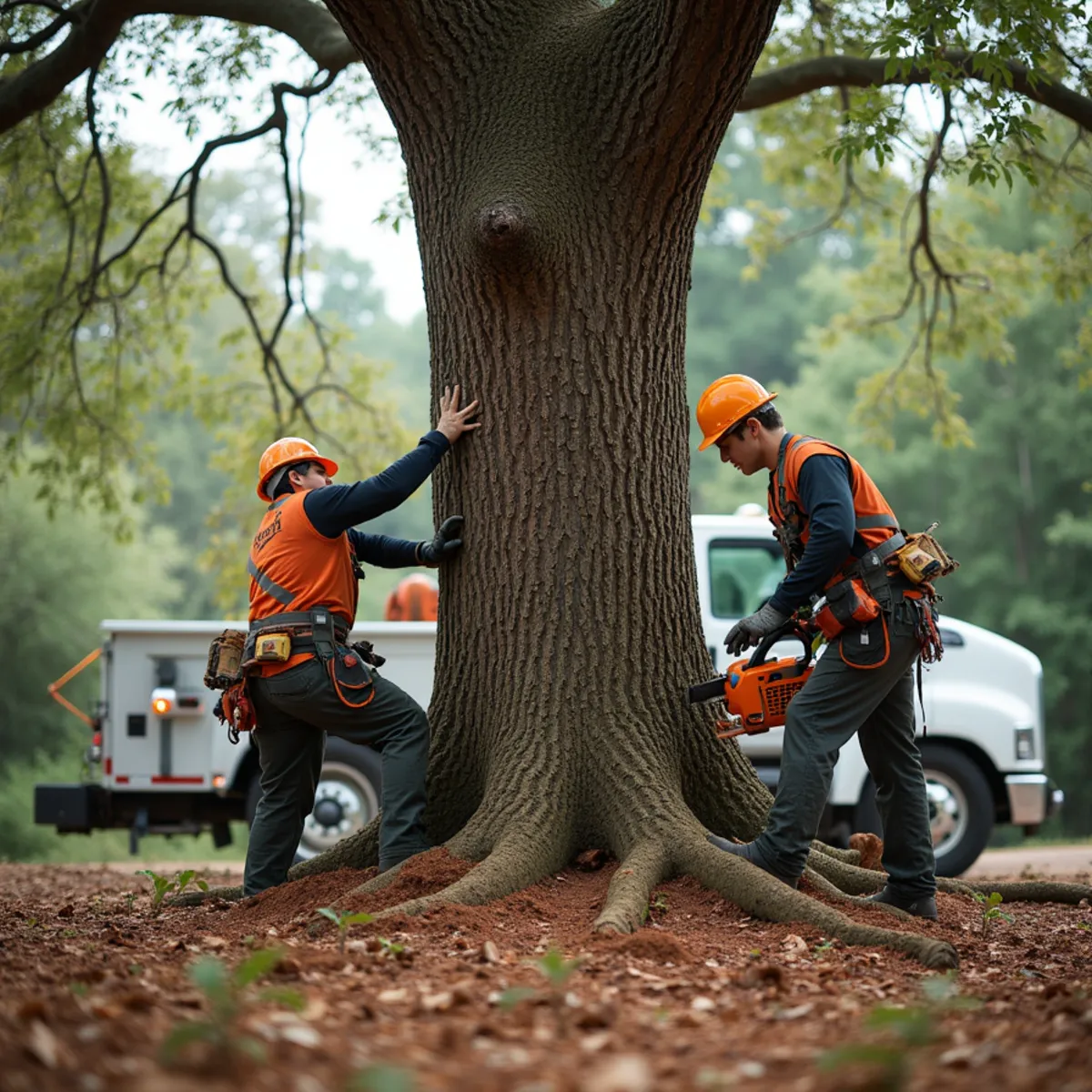
The traditional answer is to send a climber up to dismantle the tree piece by piece, rigging each limb down through a tight space. That works, but on a big hardwood over a confined yard it is slow, physically demanding, and leaves more chances for something to swing into the house. A crane changes the equation.
How Crane-Assisted Removal Works
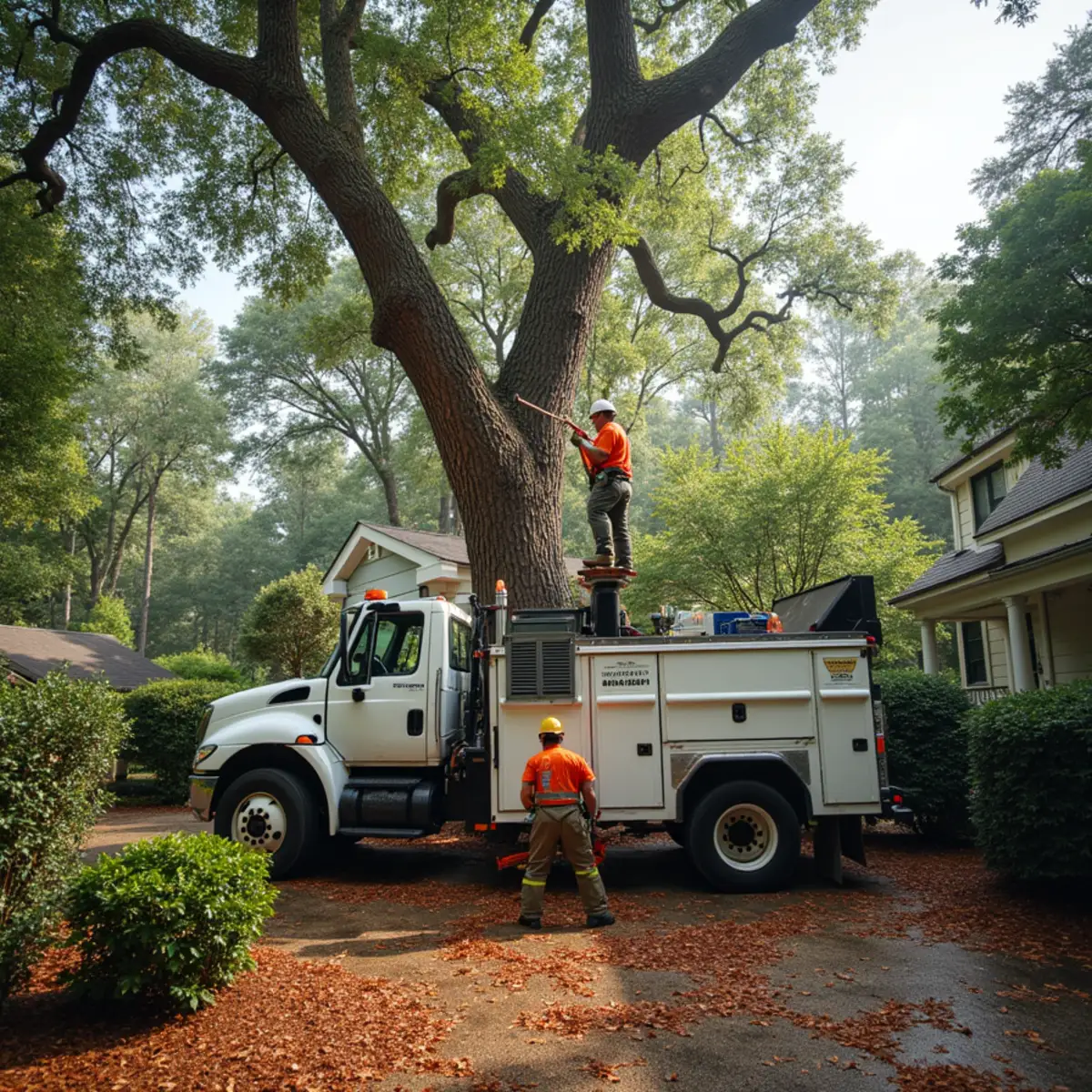
With crane-assisted removal, the crane is set up in the street or driveway and its boom reaches over the house to the tree. A climber or bucket operator attaches each section to the crane before it is cut, so the piece is already supported when the saw finishes. Instead of dropping or swinging, the wood is lifted cleanly up and over the roof, then set down in a staging area.
The whole operation follows ANSI Z133 safety practice and a written lift plan that accounts for the weight of each pick, the reach of the boom, and the ground the crane sits on. Nothing is lifted that the crane is not rated to carry at that radius.
Why It Is Safer, Not Just Faster
The safety gain comes from control. When a section is secured to the crane before the final cut, it cannot fall in an unplanned direction. That protects the roof, the fence, the pool, and the crew working below.
- Sections are supported before cutting, eliminating uncontrolled drops.
- Crews spend less time aloft in a compromised or storm-damaged tree.
- Heavy picks clear the roof entirely instead of being rigged past it.
- Fewer pieces and less hand-carrying mean less traffic through your yard.
- The lift plan is calculated to the crane's rated capacity at each radius.
Where a Crane Earns Its Keep
Crane removal shines on exactly the trees homeowners worry about most: a huge water oak leaning over the house, a storm-damaged pine that is unsafe to climb, or a dead tree whose wood can no longer be trusted to hold a climber. It is also ideal when a tree overhangs a structure and every piece must clear the roofline.
On simpler trees in open yards, a crane is overkill and standard tree removal is the better value. The judgment call is exactly what a site assessment is for, and we make that call honestly rather than defaulting to the biggest machine.
Setup, Access, and Neighbors
A crane job takes planning. We review where the outriggers can safely bear, whether the street can be briefly staged or requires traffic control, and how the boom clears overhead utility lines. Soft or wet red clay may need matting to spread the load, and a very tight street can limit which crane size fits.
Good crane operators also communicate with neighbors, because the boom often swings over a property line for a moment. Handling that courteously is part of a professional job, especially in dense intown neighborhoods.
Serving Atlanta and Sandy Springs
We run crane removals throughout Atlanta and up into Sandy Springs, where hilly lots, mature canopy, and tight access are the norm rather than the exception. Whether it is a hazard over the master bedroom or a dead giant in a fenced backyard, we scope the lift before we commit to it.
That scope tells you the crane size, the staging plan, the protection for your lawn and drive, and the sequence of picks, all in writing.
The Setup Decides the Job, Not the Backyard
The most common misunderstanding about crane removals is where the crane goes. It almost never sets up in the backyard with the tree. It works from the street or the driveway and reaches over the house, which means the factors that decide whether a crane is even possible sit out front, not out back. The width of the road, room for the outriggers to deploy on solid ground, and the overhead power lines strung between the crane and the tree are what make or break the plan.
That last point is the one homeowners forget. If primary conductors run along the street, the boom and the load have to clear them, and that may require coordination or clearance work under utility line clearance before a single pick happens. On a tight intown street, the available crane size can be limited by the lines as much as by the pavement.
The table shows the setup factors we walk before quoting a crane, and how each one gets solved.
| Setup factor | Why it decides the job | Common fix |
|---|---|---|
| Street or driveway width | The crane needs room to set outriggers | Larger machine or brief street staging |
| Overhead primary lines | Boom and load must clear conductors | Utility coordination or clearance pruning |
| Ground bearing under outriggers | Soft red clay can shift the load | Steel or timber matting to spread weight |
| Reach to the tree over the house | Capacity drops as the boom extends | Match pick sizes to rated capacity |
Get a Lift Plan for Your Tree
If a large tree is trapped behind your Atlanta house with no easy way out, call (855) 615-0568 for a crane tree removal assessment. We will tell you honestly whether a crane or conventional removal fits your lot, and we will build a lift plan that protects your home, your yard, and everyone on the ground.
Written & reviewed by
The Your Tree Expert crew
This guide was written and reviewed by our working arborists — ISA-informed, fully licensed and insured, serving Fulton County and Metro Atlanta since 2020. We handle the removals, storm cleanups, and assessments described here every day.
Need a hand from a certified arborist?
Your Tree Expert provides fast, insured tree care across Atlanta and Metro Atlanta. Get a free written estimate or call our 24/7 line.