Prevention & Maintenance
Signs of Internal Trunk Decay in Century-Old Georgia Oaks: Cavities and Conks
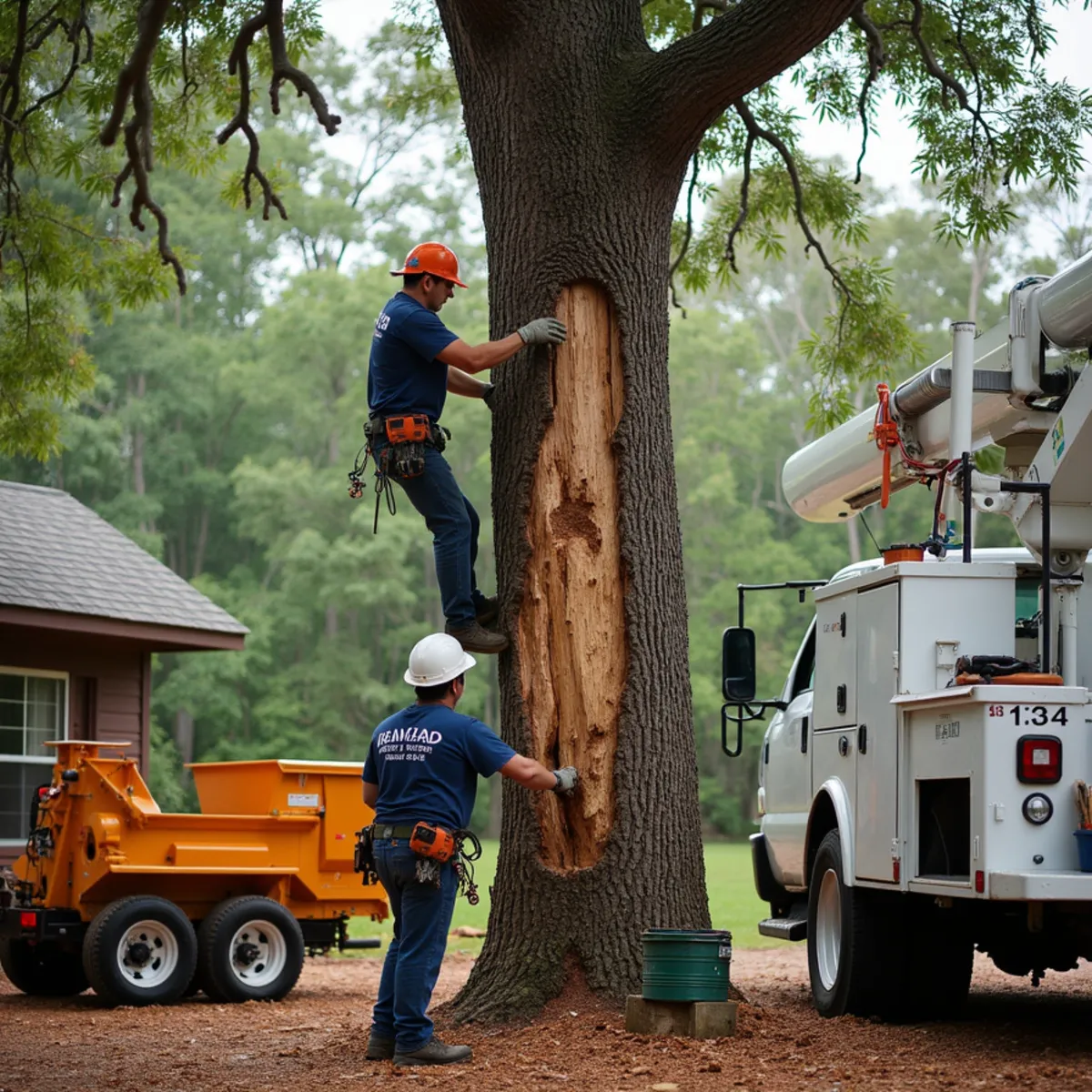
A century-old oak can be hollowing from the inside while looking healthy on top. Learn to read the cavities, conks, and sounds that reveal internal trunk decay.
The Hidden Risk in a Grand Old Oak
Georgia has magnificent oaks that predate the neighborhoods around them, and homeowners rightly cherish them. But age brings decay, and the most dangerous thing about internal trunk decay is that a tree can be extensively hollow while its canopy still looks full and green. The failure, when it comes, can seem to arrive out of nowhere.
Decay fungi enter through wounds, old pruning cuts, and storm damage, then slowly break down the wood inside the trunk. A century-old oak may have decades of accumulated decay hidden behind sound-looking bark. Learning to read the outward signs is how you catch it in time.
Conks and Fungal Fruiting
The most telling sign of internal decay is fungal fruiting on the trunk. When you see a conk, a shelf-like bracket fungus, or clusters of mushrooms emerging from the bark, it is the visible reproductive structure of a fungus that is already consuming the wood inside. The decay is typically far more advanced than the small conk on the surface suggests.
Where the conk appears matters. Fruiting low on the trunk or at the root flare points to decay in the most critical structural zone. Any conk on a large oak near a target warrants a professional look, because it is a window into damage you cannot otherwise see.
Cavities, Cracks, and What They Reveal
Open cavities and hollows are obvious once you know to look, but their meaning is often misread. A tree can tolerate a surprising amount of internal hollowing as long as a sound shell of outer wood remains, so a cavity does not automatically mean removal. What matters is how much sound wood is left and where.
- Open cavities or holes in the trunk, especially large or deep ones.
- Vertical cracks, seams, or bulges that suggest internal stress.
- Soft, crumbly, or punky wood you can probe by hand.
- Carpenter ant activity or sawdust-like frass indicating decayed wood.
- A hollow sound when the trunk is tapped with a mallet.
Reading the Canopy for Clues
The crown tells part of the story too. Dieback in the upper canopy, undersized or off-color leaves, and large dead branches can all reflect a trunk or root system that can no longer fully support the tree. When canopy decline pairs with conks or a cavity on the trunk, the concern rises considerably.
Still, none of these signs alone gives you the answer. A photograph is not a diagnosis, and even an experienced eye needs to assess the tree in person to judge how much of the trunk remains sound.
How Professionals Assess Internal Decay
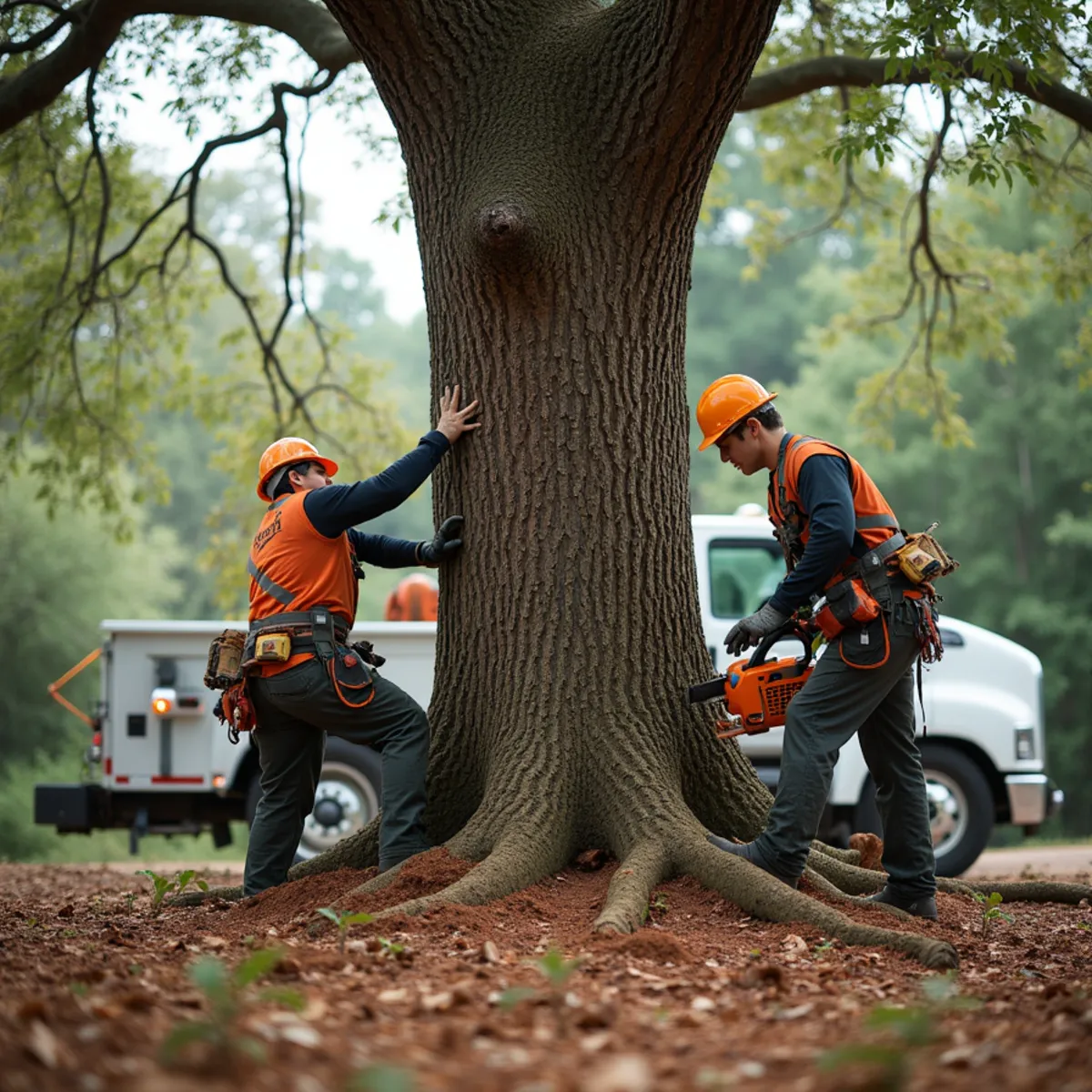
A proper hazardous tree assessment goes beyond looking at the outside. An arborist sounds the trunk for hollows, probes cavities to gauge the extent of decay, and evaluates the ratio of sound wood to hollow. Where more information is needed, specialized tools can measure the remaining wall thickness without harming the tree.
The judgment then combines the decay with the target and the load: a hollow oak deep in the woods is a curiosity, while the same tree over a bedroom is a hazard. That is how a professional decides between preservation, pruning to reduce load, cabling, monitoring, or removal.
Preservation When It Is Safe
Removal is not the automatic answer for a decaying heritage oak. Where a sound shell remains and the risk can be managed, an arborist may recommend reducing end weight on heavy limbs, installing support, and setting a monitoring schedule to keep the tree standing safely for years more. These grand trees are worth the effort when the numbers support it.
In Marietta and across Cobb County, where mature oaks line older streets and shade historic homes, we take that preservation-first view, recommending removal only when the decay genuinely outweighs what can be safely kept.
The Sound-Wall Rule and the Concrete Myth
When arborists judge a hollow trunk, they are not asking whether there is a cavity but how much solid wood rings it. A long-standing rule of thumb holds that a tree can often tolerate substantial internal hollowing as long as the remaining sound wall is at least about a third of the stem's radius all the way around. Below that, or where a large open wound breaks the ring, the margin drops quickly. It is only a starting guide, not a verdict, and an open cavity that removes part of the wall is more serious than a fully enclosed hollow of the same size.
The width of the trunk opening matters as much as the depth, because an open face cannot form the closed tube that gives a hollow tree much of its remaining strength.
One thing the assessment never leads to is filling the cavity. The old practice of packing a hollow with concrete or spray foam does not restore strength; it traps moisture, abrades the wood as the trunk flexes, and hides the very decay you need to watch. The sound answer is to measure what remains, reduce end weight where it helps, and let a hazardous tree assessment track the tree over time rather than seal the problem out of sight.
| What we weigh | Rule of thumb | Caveat |
|---|---|---|
| Sound wall thickness | About a third of the radius or more | A guide, not a guarantee |
| Open cavity width | Wider openings cut strength faster | An open face beats an enclosed hollow |
| Canopy load above | Reduce end weight to lower stress | Pair with ongoing monitoring |
| Cavity treatment | Never fill with concrete or foam | Traps moisture, hides decay |
Have a Suspect Oak Assessed
Conks, cavities, or a hollow sound on a large old oak are signals worth acting on before a failure. Call (855) 615-0568 for a professional trunk decay assessment. We will measure what sound wood remains and recommend preservation, support, or removal based on the real risk to your property.
Written & reviewed by
The Your Tree Expert crew
This guide was written and reviewed by our working arborists — ISA-informed, fully licensed and insured, serving Fulton County and Metro Atlanta since 2020. We handle the removals, storm cleanups, and assessments described here every day.
Need a hand from a certified arborist?
Your Tree Expert provides fast, insured tree care across Atlanta and Metro Atlanta. Get a free written estimate or call our 24/7 line.