Local-Specific Angles
Southern Pine Beetle Outbreaks in Georgia: Warning Signs and Emergency Removal
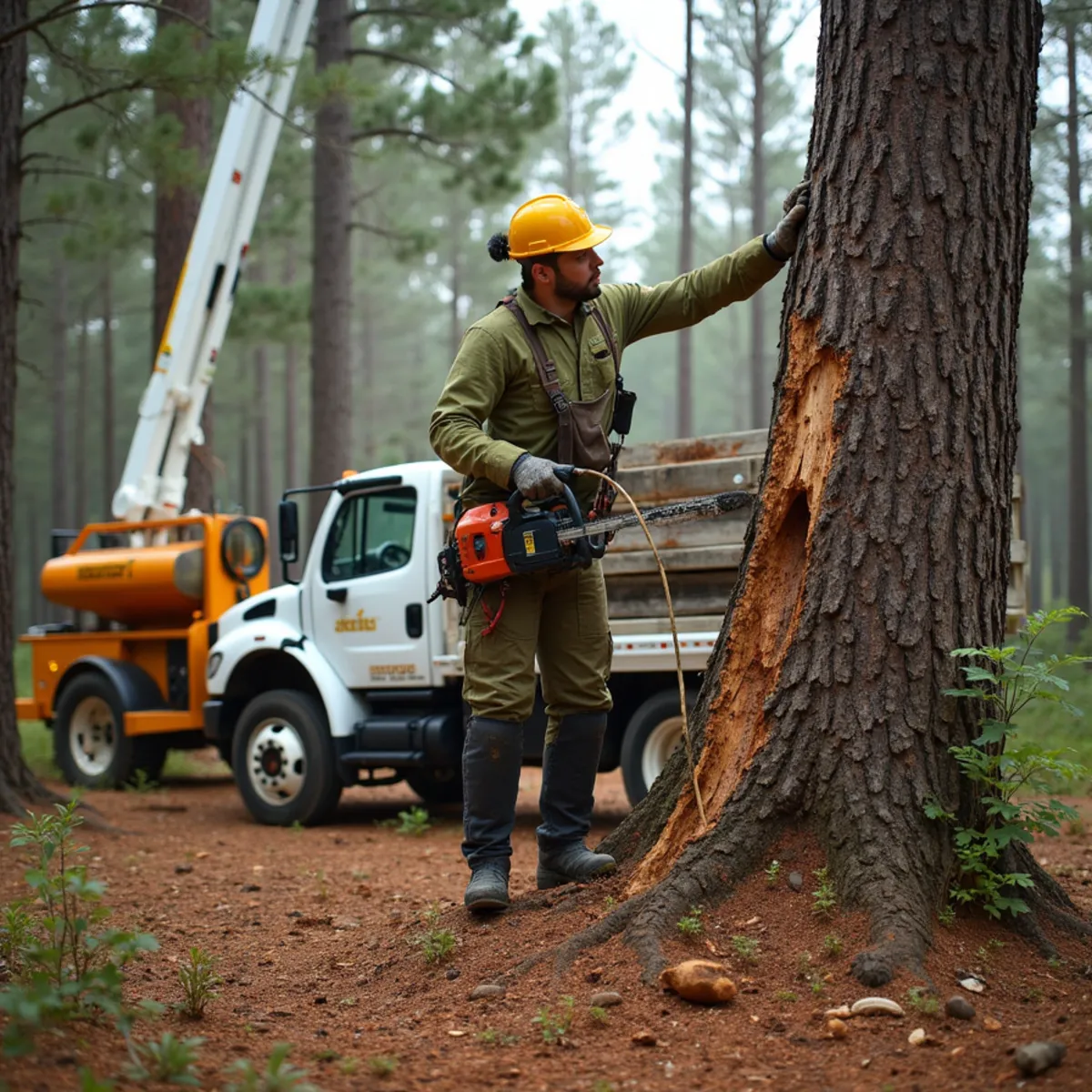
The southern pine beetle can kill a stand of Georgia pines in weeks and jump to your neighbor's trees. Learn the warning signs and why fast removal matters.
A Small Beetle With Outsized Consequences
The southern pine beetle is only a few millimeters long, but it is the most destructive forest insect in the Southeast. During an outbreak it can overwhelm and kill healthy pines in a matter of weeks, spreading from tree to tree and creating expanding pockets of dead timber. In a Georgia subdivision full of loblolly and shortleaf pines, that is both a forest problem and a homeowner hazard.
The beetles bore through the bark and introduce blue-stain fungi, cutting off the tree's ability to move water and nutrients. Once a pine is successfully attacked, it cannot be saved, and it becomes a spreading threat to every pine nearby.
The Warning Signs on Your Pines
Early detection is everything, because the beetle moves fast. Learn to read the signs from the ground.
- Popcorn-sized pitch tubes of white or yellow resin on the trunk bark.
- Fading crowns turning from green to yellow to red-brown, often top-down.
- Fine reddish boring dust in bark crevices and at the base of the tree.
- S-shaped winding galleries under the bark where it flakes away.
- Small round exit holes peppering the bark like buckshot.
- Woodpecker activity stripping bark to reach the larvae inside.
Why It Spreads So Aggressively
Southern pine beetles use pheromones to mass-attack, concentrating hundreds of beetles on a single tree until its defenses are overwhelmed, then moving as a wave to adjacent pines. An infestation that starts with one stressed tree can become a growing spot of dead and dying pines within weeks, especially in warm weather when generations overlap.
Drought-stressed, crowded, and lightning-struck pines are the usual first targets, but during a true outbreak even vigorous trees fall. The University of Georgia Extension and the Georgia Forestry Commission track outbreaks precisely because they can escalate so quickly.
Removal Is the Frontline Control
For a homeowner, the practical response to an active infestation is prompt removal of infested trees to stop the spread. Once a pine is successfully colonized, no spray will save it, and every day it stands, the beetles inside are maturing to attack neighboring trees. Fast pine beetle tree removal removes both the hazard and the beetle source.
There is a safety dimension too. A beetle-killed pine dries out, becomes brittle, and can drop limbs or fail entirely, so it turns into a standard removal hazard on top of the pest problem. Removing it protects both your remaining trees and your property.
Protecting the Pines You Still Have
After removing infested trees, the focus shifts to the survivors. Keeping remaining pines healthy and unstressed is the best defense, since vigorous trees can pitch out a limited attack. Avoid soil compaction and root damage around them, water during severe drought, and keep an eye out for new pitch tubes.
In stands where pines are crowded, thinning to reduce competition can lower the risk of the next outbreak. An arborist can advise which trees to keep and which to remove proactively.
Serving Fulton County Pine Country
Much of Fulton County and the surrounding metro is dotted with mature loblolly pines, exactly the fuel a beetle outbreak needs. When one shows up in a neighborhood, speed matters, and coordinating removals across adjacent properties often makes the difference between a contained spot and a spreading one.
If you spot fading crowns or pitch tubes on your pines, treat it as time-sensitive rather than something to watch for a few weeks.
Is It Really the Southern Pine Beetle?
Before you remove a stand of pines in a panic, it is worth confirming which beetle you are dealing with, because Georgia has several and they do not all behave alike. The southern pine beetle is the aggressive spreader that mass-attacks and jumps to healthy neighbors, and it is the one that demands fast pine beetle tree removal. But Ips engraver beetles and the black turpentine beetle are far more opportunistic, generally colonizing trees already stressed by drought, injury, lightning, or construction damage.
The distinction changes the response. Ips and turpentine beetle activity is often a symptom of an underlying stress problem rather than a fast-moving outbreak, so the priority shifts toward relieving that stress and monitoring rather than clearing every pine nearby. Misreading one for the other leads either to removing trees that did not need to go, or to moving too slowly on the one beetle that truly spreads.
The table sums up how the common Georgia bark beetles differ and what each calls for.
| Beetle | Typical attack pattern | Practical response |
|---|---|---|
| Southern pine beetle | Mass-attacks and spreads to healthy pines | Prompt removal to stop the spread |
| Ips engraver beetles | Hits stressed or injured trees and tops | Relieve stress, monitor, remove if failing |
| Black turpentine beetle | Lower trunk of weakened pines | Address stress; often not spreading |
| Pitch tube height and color | Helps tell the species apart | Confirm before clearing a stand |
Act Fast on Beetle-Struck Pines
Southern pine beetle does not wait, and neither should you. If your Georgia pines show pitch tubes, fading crowns, or boring dust, call (855) 615-0568 for prompt pine beetle tree removal. We will confirm the infestation, remove affected trees to slow the spread, and advise on protecting the pines you want to keep.
Written & reviewed by
The Your Tree Expert crew
This guide was written and reviewed by our working arborists — ISA-informed, fully licensed and insured, serving Fulton County and Metro Atlanta since 2020. We handle the removals, storm cleanups, and assessments described here every day.
Need a hand from a certified arborist?
Your Tree Expert provides fast, insured tree care across Atlanta and Metro Atlanta. Get a free written estimate or call our 24/7 line.