Commercial / Property Managers
HOA Tree Canopy Guidelines in Metro Atlanta: Balancing Forest Beauty with Homeowner Safety
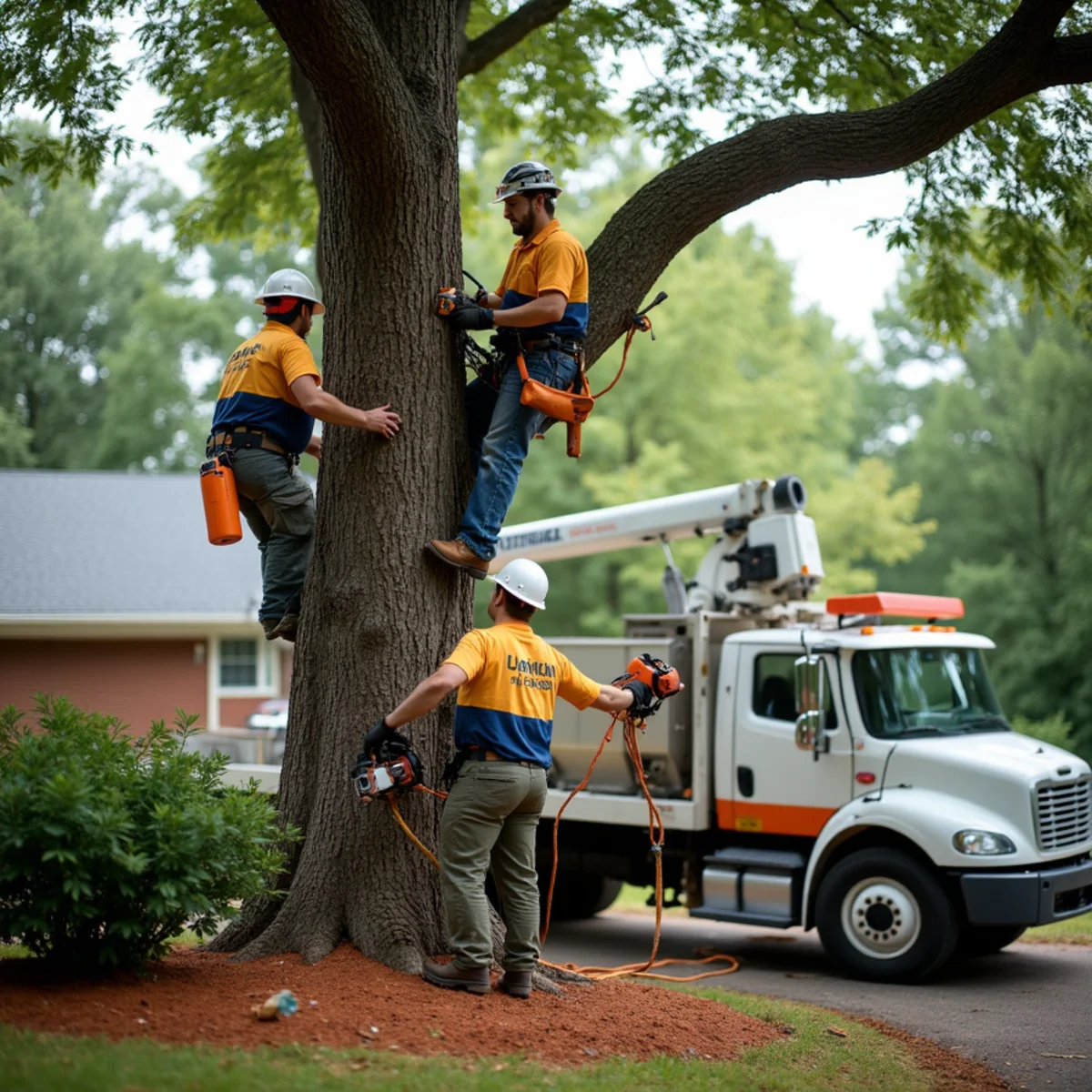
Metro Atlanta HOAs sit between preserving the neighborhood canopy and keeping residents safe. Here is how to write and manage tree guidelines that do both.
The HOA's Balancing Act
Metro Atlanta's most sought-after neighborhoods sell themselves on their tree canopy, the arching oaks over the street, the wooded buffers, the shade that keeps a subdivision cool and green. Homeowners associations are the stewards of that canopy, and they face a genuine tension: preserve the trees that give the community its value, while keeping residents safe from the ones that become hazards.
Lean too far toward preservation and you leave dangerous trees standing over homes. Lean too far toward removal and you erode the character that made people buy there. Good HOA guidelines thread that needle with clear, consistent rules grounded in professional judgment.
What Belongs in HOA Tree Guidelines
Effective covenants and architectural guidelines spell out how tree decisions get made so they are consistent and defensible, not arbitrary from one homeowner to the next.
- Which trees are community-owned common-area trees versus homeowner responsibility.
- An approval process for removing significant trees on individual lots.
- Criteria for when removal is justified, tied to health, hazard, and species.
- Replacement or replanting requirements to sustain the canopy over time.
- A defined path for hazardous and emergency situations that need fast action.
- How the association handles trees straddling property lines and buffers.
Aligning With City Ordinances
HOA rules do not exist in a vacuum. Many metro communities fall under municipal tree-protection ordinances, and within the City of Atlanta the Tree Protection Ordinance regulates removal of trees above certain sizes regardless of what the HOA says. An association's guidelines should complement, not contradict, the local law.
That means an HOA approval is not a substitute for a required city permit, and homeowners need to understand both may apply. Building that awareness into the guidelines prevents residents from removing a regulated tree with HOA blessing but without the permit the city demands. Our Atlanta tree permit guide is a useful reference to point residents to.
Hazard Trees Need a Fast Track
The most common failure in HOA tree policy is a removal-approval process so slow that a genuinely hazardous tree stands for months while paperwork circulates. A dead pine leaning over a house cannot wait for the next quarterly board meeting.
Well-written guidelines include an expedited path for documented hazards: a homeowner or the association obtains a professional hazardous tree assessment, and a confirmed imminent hazard can be addressed promptly under a defined process. This protects residents and shields the association from liability for a known danger left standing.
Sustaining the Canopy Over Time
A canopy is not static. Trees age, decline, and are removed, and without replanting a neighborhood slowly loses the very asset it prizes. Forward-looking HOAs pair removal rules with replacement requirements and periodic care for common-area trees, so the canopy renews rather than thins over the decades.
Proactive maintenance also reduces emergencies. Scheduled inspection and pruning of common-area trees catches hazards early and keeps the shared canopy healthy, which is far cheaper than reacting to failures one storm at a time.
Serving Johns Creek and North Metro HOAs
Communities like Johns Creek and across the north metro are defined by their wooded, master-planned character, and their HOAs manage significant tree assets. We partner with associations there on guideline development, common-area assessments, and rapid response, so the board has professional footing for its decisions.
And when a storm sweeps through a subdivision, an existing relationship means our storm damage cleanup crews can mobilize across the community quickly rather than starting cold.
Who Owns the Tree on the Property Line?
The disputes that consume an HOA board's time are rarely about the obvious common-area oak; they are about the tree straddling a boundary or leaning across one. Clear guidelines head those off by stating the ground rules before tempers flare. In Georgia, a tree whose trunk sits on the line is generally the shared responsibility of both owners, while a tree trunk entirely on one lot belongs to that owner even when its branches or roots cross over.
The other half of that rule is the self-help principle: a neighbor may usually trim branches and roots back to the property line at their own expense, but not cross the line to cut, and not prune so severely that they harm or kill the tree. Spelling this out in the guidelines, and pointing residents to a professional hazard assessment before they over-cut a shared tree, prevents both damage and lawsuits.
The table gives a board a quick reference for the situations that come up most.
| Situation | Typical responsibility | Guideline approach |
|---|---|---|
| Trunk sits on the boundary line | Shared by both owners | Require mutual agreement to remove |
| Trunk on one lot, limbs overhang | The trunk owner's tree | Neighbor may trim to the line only |
| Common-area tree over a lot | The association | Association inspects and maintains |
| Hazard tree threatening either side | Owner of the trunk | Expedited assessment and action |
Partner on Your Community's Canopy
Balancing beauty and safety is easier with an arborist on the board's side. Call (855) 615-0568 to work with us on HOA tree guidelines, common-area hazard assessments, and priority storm cleanup for your metro Atlanta community. Protect the canopy and the residents under it.
Written & reviewed by
The Your Tree Expert crew
This guide was written and reviewed by our working arborists — ISA-informed, fully licensed and insured, serving Fulton County and Metro Atlanta since 2020. We handle the removals, storm cleanups, and assessments described here every day.
Need a hand from a certified arborist?
Your Tree Expert provides fast, insured tree care across Atlanta and Metro Atlanta. Get a free written estimate or call our 24/7 line.