Local-Specific Angles
Surviving Severe Georgia Ice Storms: Why Pine Trees Snap and Hardwoods Drop Limbs
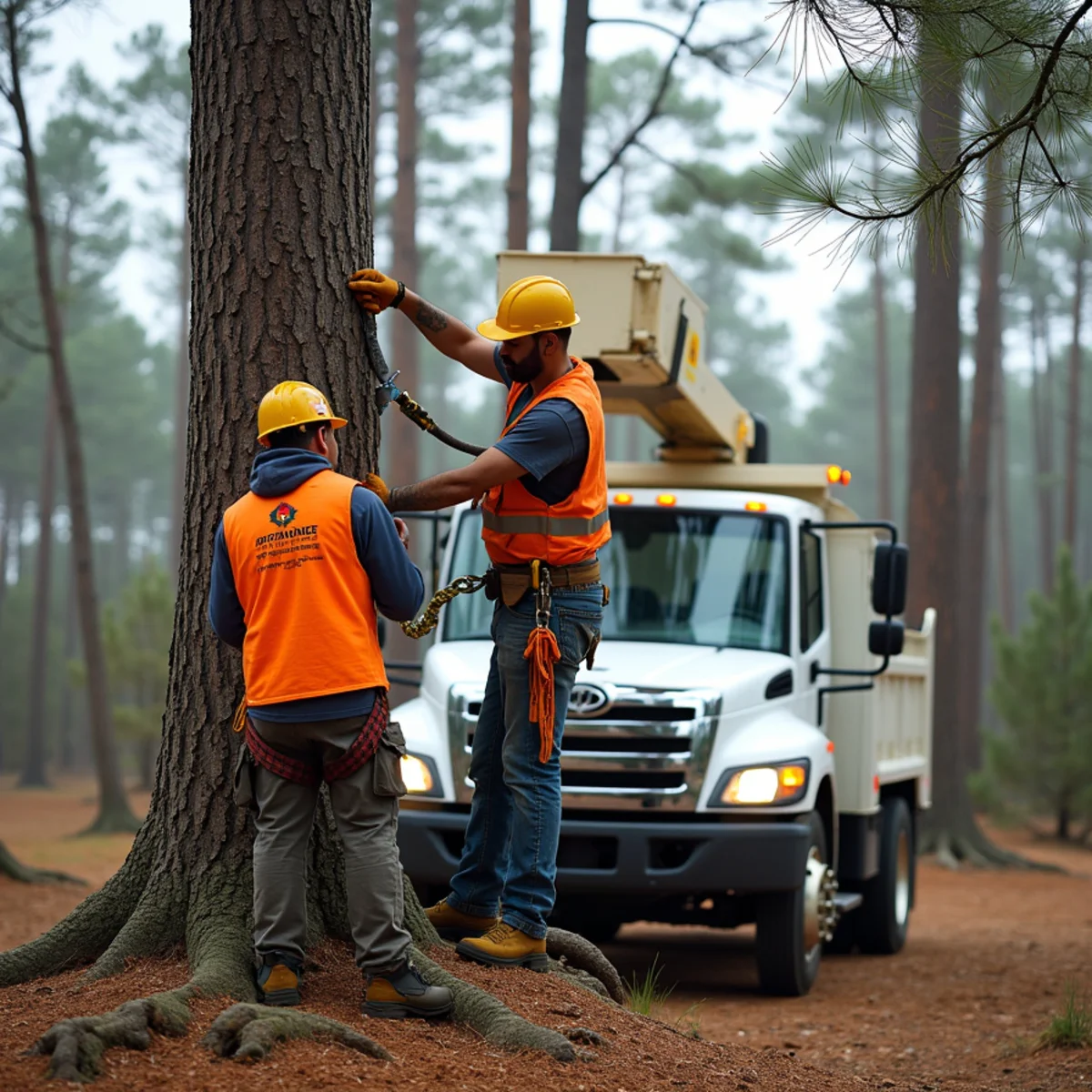
Ice storms are Georgia's most punishing weather for trees. Learn why pines snap, hardwoods shed limbs, and how to prepare and clean up safely.
Georgia's Most Punishing Tree Weather
Georgia does not get ice often, but when it does, the damage to trees can exceed a summer thunderstorm. An ice storm coats every branch and needle in a load of frozen weight that trees this far south are not built to carry, and the failures come in waves as the ice accumulates and then as it melts unevenly.
The result is snapped pine tops, hardwood limbs torn from trunks, and power lines dragged down by loaded branches. Understanding why different trees fail differently helps you know which ones to worry about before the forecast turns to freezing rain.
Why Pines Snap
Loblolly and other southern pines are especially vulnerable to ice because of their shape. A pine carries a tall, top-heavy crown of needles and slender branches, and every needle collects ice. That loads enormous weight high on a relatively flexible trunk.
When the load exceeds what the stem can bear, the pine bends until the top snaps clean off, often 20 or 30 feet up. Whole stands of pines can shear at similar heights in a bad ice event. A snapped pine top hanging in the canopy or resting on a roof is a serious hazard that should not be approached.
Why Hardwoods Drop Limbs Instead
Hardwoods like oaks and maples tend to fail differently. Their wide, spreading canopies of horizontal branches catch ice across a large surface, and the weakest points, weak unions, over-extended limbs, and previously damaged wood, give way. Rather than snapping at the top like a pine, a hardwood usually sheds large limbs.
This is where past pruning history matters. A tree that was topped or lion-tailed has weak, poorly attached growth that is far more likely to break under ice, which is one more reason proper pruning pays off years later.
Preparing Before the Ice Arrives
You cannot ice-proof a tree, but you can reduce the odds of a failure over your house. The work has to be done before the storm, not during it.
- Have hazardous, dead, and weakly attached limbs removed ahead of winter.
- Address over-extended limbs and weak unions with proper reduction pruning or support.
- Identify top-heavy pines close to the house that pose a snap risk.
- Clear anything already leaning or cracked before the load arrives.
- Know where your power lines run relative to loaded branches.
Recovering Safely After the Storm
When the ice comes down, resist the urge to start cutting immediately. Ice-loaded and partially broken limbs are under tension and can release violently, and hanging limbs, called widow-makers for good reason, can drop without warning. Keep clear until branches have shed their ice and a professional can work them safely.
Treat any tree or limb touching a power line as energized and call the utility first. Then bring in a crew for hanging limb removal and storm damage cleanup rather than putting yourself under a loaded canopy with a ladder and a chainsaw.
Serving Kennesaw and West Metro
Communities like Kennesaw and the west metro sit in the belt where Georgia ice events tend to hit hardest, and the mix of tall pines and mature hardwoods there produces exactly the failures described above. After a significant ice storm, demand for crews spikes, so getting on the list early matters.
We prioritize active hazards, trees on structures and blocked access first, then work through cleanup as conditions allow.
After the Ice: Restore or Remove?
Once an ice storm passes, the hardest calls are the trees still standing but damaged, and homeowners make two opposite mistakes. The first is knocking or shaking the ice off loaded branches to help the tree, which does the opposite: frozen limbs are brittle, and jarring them causes the very breaks you are trying to prevent. Let the ice melt off on its own.
The second mistake is either writing off a recoverable tree or keeping a wrecked one out of attachment. The rough guide arborists use is how much of the crown is gone and whether the main leader survived. A hardwood that lost scattered limbs but kept most of its canopy and structure can usually be restored over a few seasons of corrective pruning. A tree that lost more than roughly half its crown, split at the trunk, or snapped its central leader is a poor candidate to keep, especially near a target, and that is a call a hazardous tree assessment should settle rather than a chainsaw.
The table frames the common post-ice damage and what it usually means.
| Storm damage | Restorable? | Typical action |
|---|---|---|
| A few broken limbs, crown intact | Usually yes | Corrective pruning over seasons |
| Major limbs torn, bark stripped | Sometimes | Assess wounds and remaining structure |
| Over half the crown lost | Often no | Evaluate for removal |
| Split trunk or snapped leader | Rarely | Remove, especially near a target |
Get Help Before and After the Ice
Whether you want hazardous limbs removed before winter or you have damage after an ice storm, call (855) 615-0568. We handle pre-storm hazardous limb removal and post-storm storm damage cleanup across the metro, prioritizing the trees that threaten your home and safety.
Written & reviewed by
The Your Tree Expert crew
This guide was written and reviewed by our working arborists — ISA-informed, fully licensed and insured, serving Fulton County and Metro Atlanta since 2020. We handle the removals, storm cleanups, and assessments described here every day.
Need a hand from a certified arborist?
Your Tree Expert provides fast, insured tree care across Atlanta and Metro Atlanta. Get a free written estimate or call our 24/7 line.